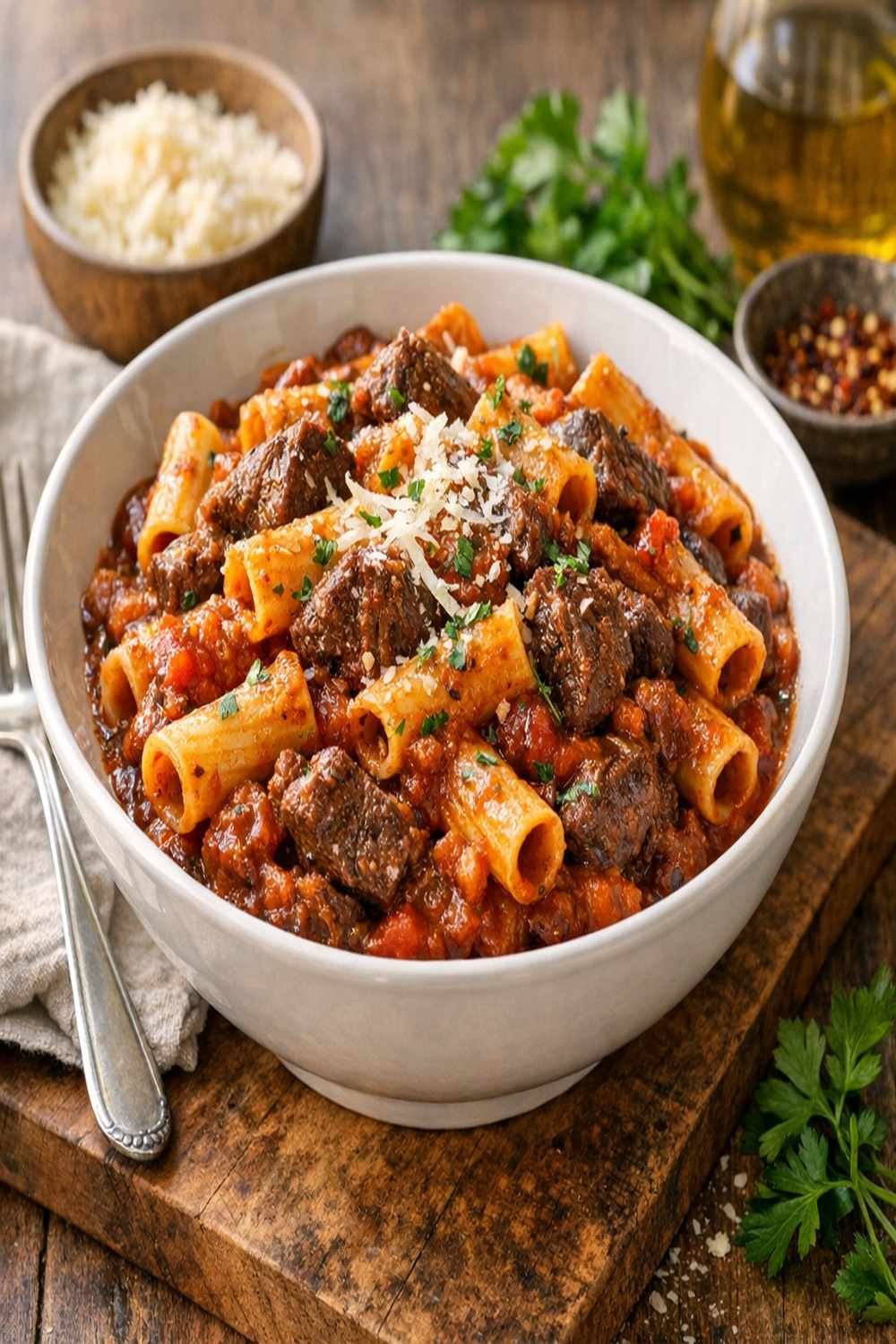

Ingredients
Method
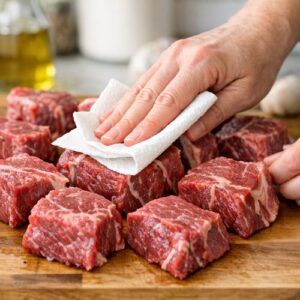
Step 1: Pat Your Beef Completely Dry
- Remove your beef chuck from the refrigerator about 30 minutes before cooking. Using paper towels, pat each piece thoroughly until no surface moisture remains. This matters more than you'd think: wet meat steams rather than sears, and a proper sear is what builds the flavorful crust that transforms this entire dish. Moisture is the enemy of browning. Sprinkle the dried beef generously on all sides with salt and black pepper. Don't be shy—this seasoning layer is your first opportunity to build flavor into the meat itself.
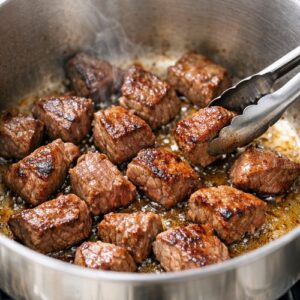
Step 2: Sear the Beef Until Golden Brown
- Heat 1 tablespoon of olive oil in a heavy-bottomed pot (cast iron or stainless steel work beautifully) over high heat. You'll know it's ready when the oil shimmers and just begins to smoke slightly. Working in batches if necessary so you don't crowd the pan, place the beef pieces in the hot oil and resist the urge to move them. Let each piece sit undisturbed for 2-3 minutes until a deep golden-brown crust forms on the bottom. Flip and repeat on all sides, aiming for a total searing time of 5-7 minutes. The beef doesn't need to be cooked through—you're purely building exterior color and flavor. Transfer the seared beef to a clean plate and set aside. Don't discard any drippings left in the pot; those caramelized bits are liquid gold for your sauce.
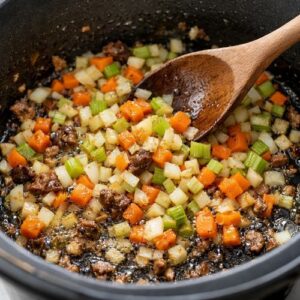
Step 3: Build Your Aromatic Base (The Soffritto)
- Reduce the heat to medium-low and add the remaining 2 tablespoons of olive oil to the same pot (this picks up all those caramelized beef bits). Add your minced garlic and diced onion, stirring frequently for about 2 minutes until fragrant and the onion just begins to soften. Now add your diced carrots and celery. Cook gently for 5 minutes, stirring occasionally. You're not trying to brown these vegetables; you want them to release their flavors slowly into the oil, creating an aromatic base that will perfume your entire sauce.
Step 4: Add the Tomato Foundation
- Stir in your tomato paste and cook it directly in the hot oil for about 1 minute. This blooms the paste and deepens its flavor dramatically. You'll notice it darkening slightly and becoming fragrant. Add your crushed canned tomatoes, crumbled beef bouillon cubes, red wine (or additional broth), and the 1½ cups of beef broth. Stir thoroughly to combine, scraping the bottom of the pot to incorporate all those caramelized beef bits. Add the bay leaves and thyme. Return the seared beef to the pot, nestling it into the liquid along with any accumulated juices from the plate. The beef should be mostly submerged; if not, add a bit more broth.
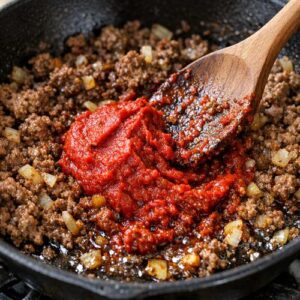
Step 5: Transfer to Your Slow Cooker
- Pour the entire contents of the pot into your slow cooker, beef and sauce together. Cover and set to low heat for 2 to 2.5 hours, or high heat for 1 to 1.5 hours. You're looking for the beef to become fork-tender enough to shred easily. At the 1.5-hour mark, begin checking: pierce a piece with a fork—it should shred without resistance. The exact timing depends on the exact size and thickness of your beef pieces and your specific slow cooker's temperature calibration. The liquid should be gently simmering, not vigorously boiling. If your slow cooker runs very hot, reduce the heat to warm or medium-low if that option exists.
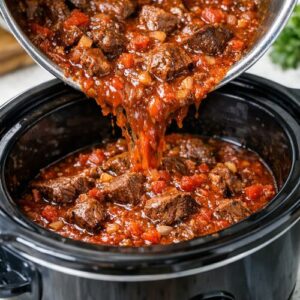
Step 6: Shred the Beef and Reduce the Sauce
- Once the beef is tender, carefully remove it from the slow cooker using tongs or a slotted spoon and place it on a cutting board. Using two forks held back-to-back, shred the beef into bite-sized pieces. Don't worry about perfection—you want pieces roughly the size of your thumbnail, which will hold the sauce beautifully on pasta. Return the shredded beef to the slow cooker. Switch the slow cooker to high heat or transfer the sauce to a pot on the stovetop and bring it to a gentle simmer. Let it cook uncovered for 30 minutes to reduce and thicken. You're concentrating flavors and creating a sauce that clings to the pasta rather than pooling at the bottom of the bowl. You should see the volume reduce by about 20-25%.
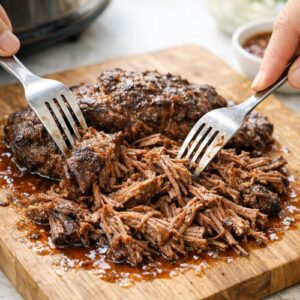
Step 7: Final Seasoning and Taste Test
- Turn off the heat and let the sauce cool for just a minute. Taste carefully. The flavors should be deep and savory. If the sauce tastes too acidic (which can happen with certain canned tomato brands), add the optional ½ teaspoon of sugar and stir. Taste again. Add additional salt and pepper as needed—remember, you're seasoning generously to account for dilution when you toss with pasta. The sauce should taste intentional and well-seasoned on its own, not bland. Cover the slow cooker and set aside until you're ready to serve. This sauce actually improves with time—it tastes noticeably better the next day as flavors marry and meld. If you're cooking ahead, this is the perfect moment to refrigerate or freeze.
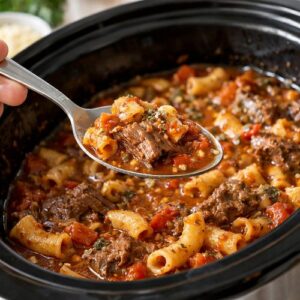
Step 8: Cook Your Pasta and Combine
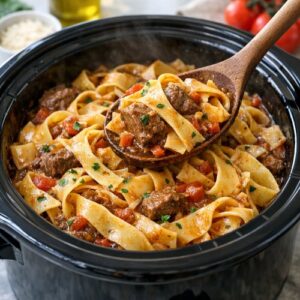
- About 15-20 minutes before serving, cook your pappardelle according to package directions, aiming for al dente (just tender with a slight bite). Reserve about 1 cup of pasta water before draining. Gently reheat your beef sauce if it's been sitting. Toss the hot pasta with the beef ragù, adding pasta water a splash at a time until you reach your preferred consistency. The starchy pasta water helps the sauce cling beautifully to each strand. Divide among bowls or plates, top with freshly grated Parmigiano-Reggiano and fresh parsley if desired, and serve immediately.
Notes
- Scaling for a crowd - This recipe scales beautifully. For 12 people, multiply all ingredients by 2 and plan on two slow cookers running simultaneously, or transfer to a large Dutch oven and finish in the oven at 300°F instead. The cooking time remains roughly the same.
- Make-ahead mastery - Prepare through Step 7 the night before. Refrigerate the sauce in an airtight container (it keeps for 4 days). The next evening, reheat gently while your pasta cooks. You've essentially turned a 3-hour dinner into a 20-minute assembly.
- Wine selection matters - Choose a red wine you'd actually drink. Avoid anything labeled "cooking wine," which contains added sodium. A merlot brings berry notes; a cabernet sauvignon brings slightly more tannin and structure. Pinot noir works too but is more subtle. If you're avoiding alcohol entirely, use an equal amount of beef broth mixed with 1 tablespoon of balsamic vinegar for complexity.
- Beef bouillon cubes warning - These are salty. I recommend starting with just one crumbled cube and adding the second during final seasoning if needed. Taste first, always.
- Tomato paste tube hack - If you don't use the entire 3-tablespoon amount, store the tube in the refrigerator (it lasts months) rather than opening a whole can. Much more practical for single cooks.
- Bay leaf safety - Remove all three bay leaves before serving. I always fish them out before blending or pureeing, and I recommend the same care here. They're flavor carriers, not edible.