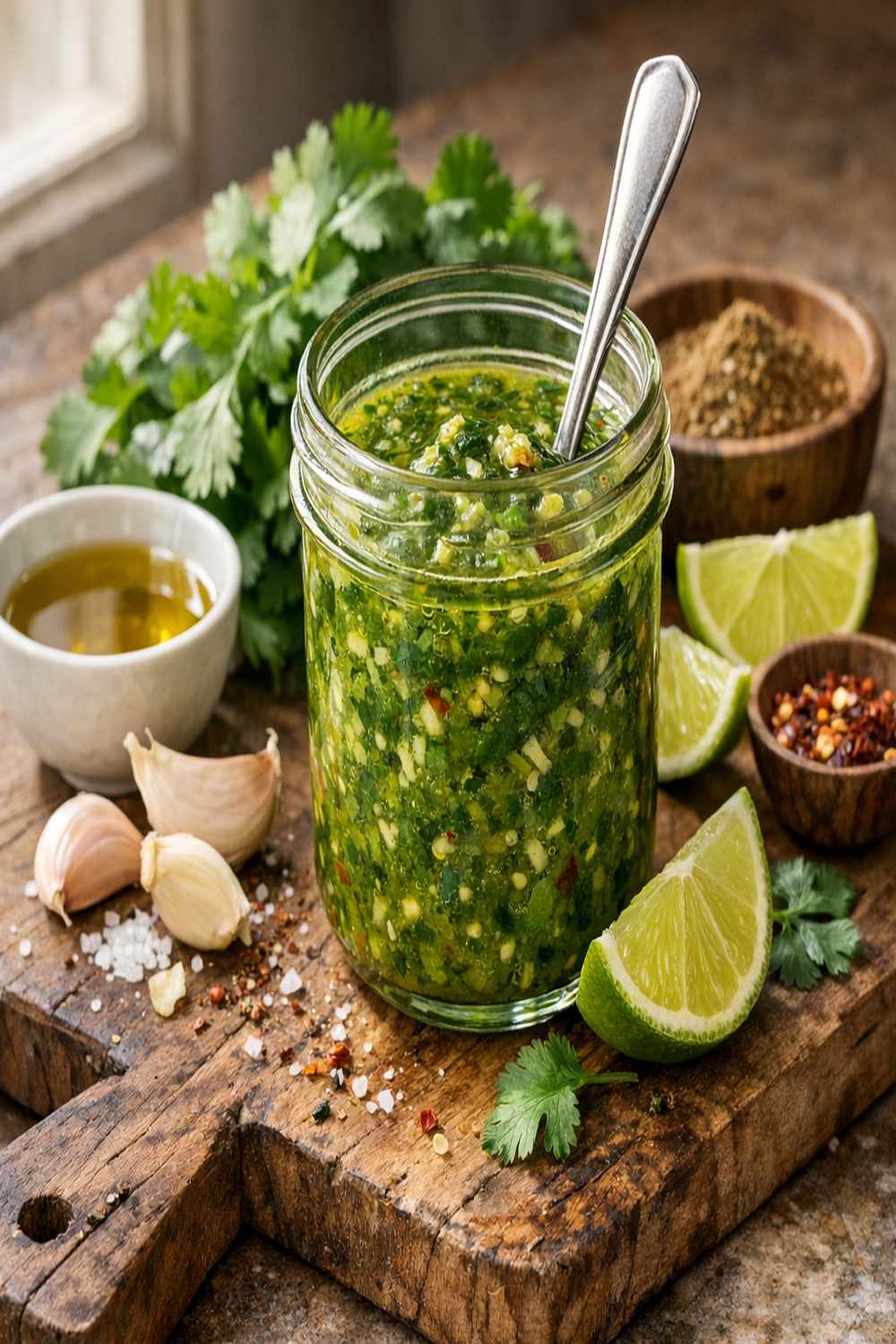

Ingredients
Method
Step 1: Prepare Your Herbs and Aromatics Properly
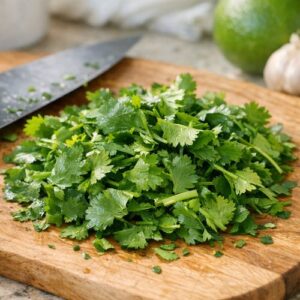
- Start by roughly chopping your cilantro—and this is important. Don't mince it into submission. You want pieces that are roughly the size of your pinky fingernail. Larger pieces will give you that beautiful flecked appearance and better texture in the final marinade. If your cilantro is wet from washing, pat it dry with a paper towel. Any excess water dilutes your final product. Measure out your three garlic cloves and mince them finely—smaller than the cilantro pieces. For the jalapeño, halve it lengthwise and use a small spoon to scrape out all the seeds and white membranes if you prefer mild heat. This is where most people make mistakes. Those white membranes contain the compound capsaicin, which is what makes peppers spicy. Removing them reduces heat by about 70 percent without eliminating the beautiful pepper flavor.
Step 2: Combine in Your Processor (Or Use the Hand-Method)
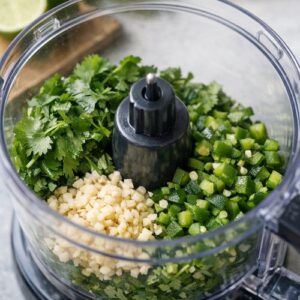
- If you have a food processor, add your cilantro, minced garlic, and diced jalapeño to the bowl. Don't add the liquids yet—this is crucial. You want to pulse the solids first to break down the herb cell walls and distribute the aromatics evenly. Pulse for about 8 to 10 short bursts, each lasting less than a second. You're looking for a texture that's roughly chopped but still clearly recognizable, not a smooth paste. Stop and open the lid to check your progress after about 5 pulses. If you don't have a processor, no problem—I make this by hand regularly. Finely mince all your cilantro, garlic, and jalapeño on a cutting board, then transfer everything to a medium bowl. Use a fork to gently mix and slightly crush the herbs as you combine them. This releases their oils without completely breaking down the cell walls.
Step 3: Add Your Fat and Acid—The Emulsification Moment
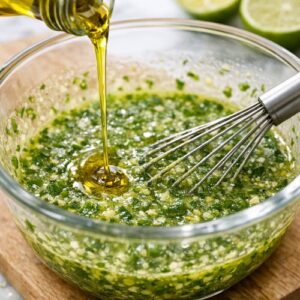
- Now drizzle in your olive oil slowly while stirring. This is where the magic happens. The oil is being temporarily suspended in the herb mixture, creating that beautiful creamy-textured marinade. Don't dump the oil in all at once—add it gradually in three additions, stirring well between each. Squeeze your lime juice fresh—bottled juice has preservatives that interfere with the flavor profile and the way the marinade clings to food. Stir gently but thoroughly, using a fork or small whisk. The mixture should look slightly emulsified, with oil and herb solids creating a cohesive whole rather than looking separated.
Step 4: Season and Taste Before Finalizing
- Sprinkle your kosher salt and black pepper over the surface, then stir to distribute evenly. Taste a small spoonful on your finger—this is where experience builds. Does the salt level feel right? Is the acid from the lime bright enough, or does it need more? Trust your palate. If you're using this on delicate fish, you might want slightly less salt since the marinade is meant to enhance rather than dominate. For beef or chicken, a more assertive seasoning works beautifully. If you're adding that optional cumin, add just a pinch and taste again. One small spoon tastes like magic; two teaspoons can overpower.
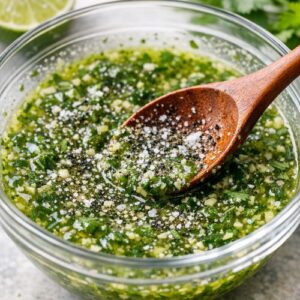
Step 5: Rest and Use Immediately or Store
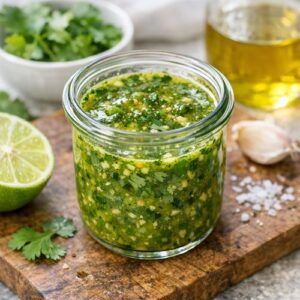
- Your marinade is ready to use immediately, though it actually benefits from resting for 10 to 15 minutes while the flavors meld together. This resting period allows the salt to fully dissolve and the herbs to continue releasing their oils. The emulsion becomes slightly more stable. Use generously on whatever protein or vegetable you're preparing—about 3 tablespoons per pound of protein. The longer something marinates, the more tender it becomes due to the acid content, but even 15 minutes creates noticeably brighter flavor.
Notes
- Over-Processing Into a Paste - if your marinade looks like green baby food, you've broken down the herbs too much. The problem is that overprocessed herbs release bitter compounds and lose their fresh character. To fix it: always pulse, never blend continuously. If you've already over-processed, strain out some of the liquid and add fresh cilantro pieces by hand. For future batches, pulse for shorter bursts and check your progress frequently.
- Adding Oil Too Quickly and Creating Separated Layers - if your finished marinade looks like oil sitting on top of herb mixture, you didn't emulsify properly. This happens when oil is added all at once before the herb cell walls are broken down enough to hold it. To fix it: whisk vigorously for 30 seconds. If it doesn't come together, add a teaspoon of water and whisk again. The small amount of water helps the emulsion reform. Going forward, always add oil gradually in three additions.
- Using Dried Cilantro or Old Herbs - dried cilantro tastes like hay. Old cilantro that's yellowed or slimy won't emulsify properly because the cell walls are already damaged. Always use fresh herbs that smell bright and look vibrant green. Buy cilantro the day you plan to use it, or store it stem-down in water in the refrigerator.
- Forgetting to Remove Jalapeño Seeds for Heat Control - if your marinade is unexpectedly fiery, you included the seeds. There's no fixing this once it's made. Learn from it: next time, remove seeds and white membranes before adding the pepper. If you made a batch that's too spicy, dollop in some sour cream or Greek yogurt to cool it down slightly.