Cilantro Lime Marinade Recipe
This post contains affiliate links. As an Amazon Associate I earn from qualifying purchases.
Learning to make cilantro lime marinade isn’t just about this dish—it’s about mastering a fundamental emulsification technique that unlocks dozens of other recipes. I discovered this during my early days as a dietitian when a colleague showed me how a simple herb marinade could transform everything from grilled proteins to grilled fish tacos into something memorable. That moment shifted how I approached weeknight cooking. Suddenly, healthy meals stopped feeling like obligations and started feeling like celebrations.
Master the Technique Behind Cilantro Lime Marinade Recipe (And Never Struggle in the Kitchen Again)
I’ll never forget standing in my kitchen on a Tuesday evening, staring at chicken breasts that needed to be dinner in thirty minutes. My family sat down to eat around six o’clock sharp—that was our tradition, our anchor amid the chaos of work and schedules. I grabbed whatever herbs I had on hand: cilantro that was just starting to wilt, a lime from the fruit bowl, garlic from the pantry. What I created that night wasn’t just delicious; it taught me something profound about how flavor works. Within minutes, I had transformed plain protein into something bright and alive. That’s when I realized: mastering marinades isn’t a luxury skill—it’s essential to keeping healthy eating sustainable when life gets busy.
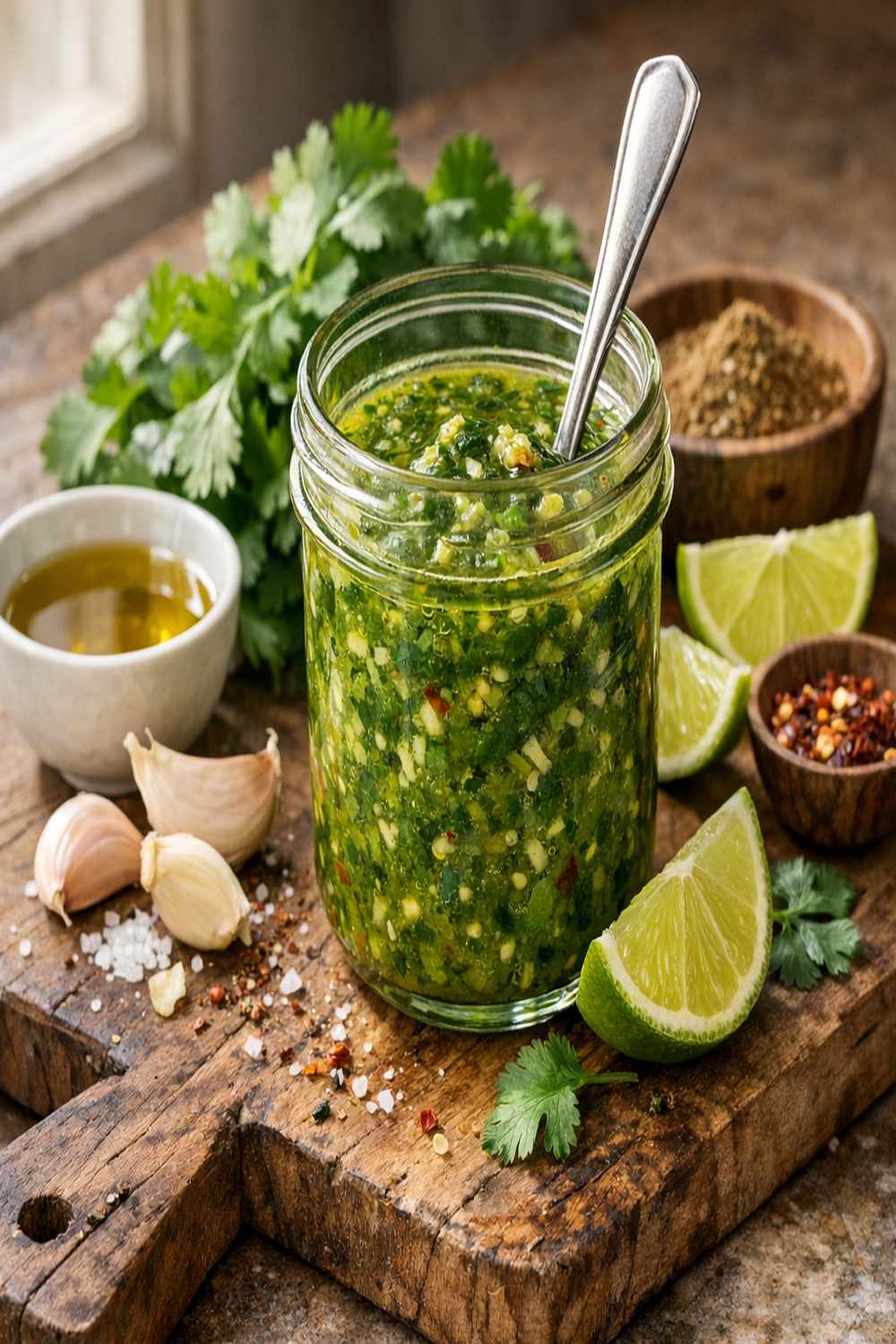
The Core Technique Explained
What you’re actually learning here is called emulsification through herb infusion. Let me break down what’s happening beneath the surface. When you blend fresh herbs, citrus juice, and oil together, you’re creating an unstable emulsion—a temporary suspension where tiny droplets of oil are distributed throughout the watery herb and citrus base. The herbs act as natural emulsifiers, their cell walls helping to hold these ingredients together temporarily. This isn’t like mayonnaise, which is a permanent emulsion stabilized by egg yolks. Instead, this is a vibrant, alive mixture that works brilliantly because it’s fresh and the ingredients haven’t fully separated.
The science matters because understanding it helps you troubleshoot. When you pulse everything together, you’re breaking down cell walls in the herbs, releasing their essential oils and flavors while keeping the texture chunky—not puréed into submission. This textural difference is what separates a mediocre marinade from one that clings to your protein, coating every surface with flavor. The acid from the lime juice begins to denature proteins the moment it touches them, which is why marinading works. You’re not just adding flavor; you’re chemically transforming the surface of your food.
What This Technique Unlocks
Once you master this emulsification and herb-infusion technique, you’ll be able to create dozens of flavor profiles. Here are the dishes that become instantly achievable:
- Grilled Fish Tacos – the same technique makes bright, fresh fish marinades
- Marinated Chicken for Burritos – herbaceous proteins that transform simple wraps into restaurant-quality meals
- Herb-Dressed Grain Bowls – this technique teaches you how to build dressing that clings to every ingredient
- Marinated Shrimp Appetizers – quick-cooking proteins that absorb flavor in minutes instead of hours
- Vegetable Marinades for Grilling – mushrooms, zucchini, and peppers that taste restaurant-quality
- Fresh Herb Pasta Sauces – the emulsification principle applies to warm applications too
The Ingredients—Chosen to Teach the Technique
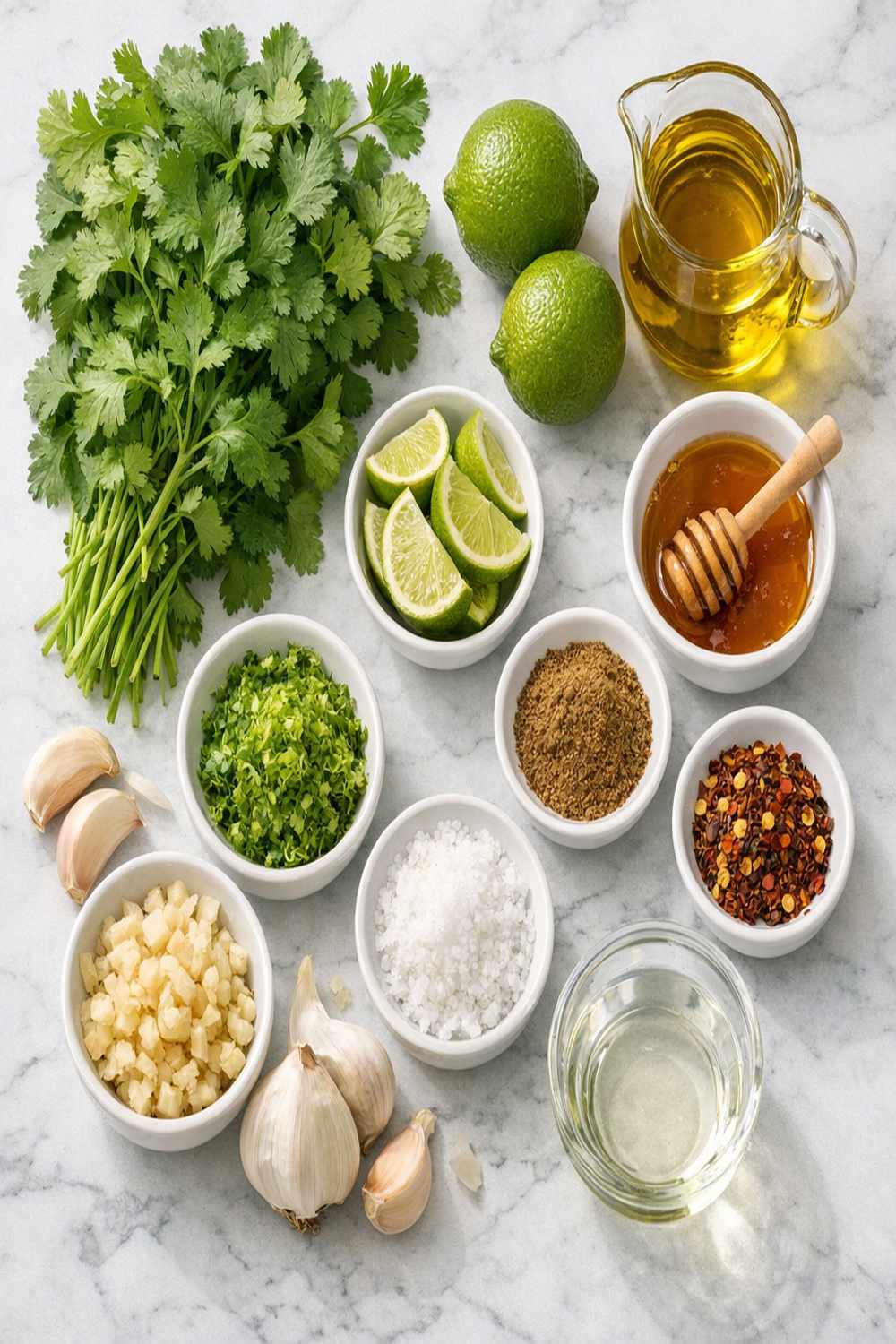
Every ingredient here serves a purpose in teaching you how emulsions work. I’ve chosen each one specifically because it demonstrates a different principle. Understanding why each ingredient matters will help you adapt this technique confidently to any situation.
- 3 cloves fresh garlic (minced fine—provides pungency and contains sulfur compounds that enhance preservation)
- ½ teaspoon ground black pepper (freshly cracked if possible—adds subtle heat and complexity)
- juice of 1 lime (approximately 2 tablespoons fresh-squeezed—the acid that denatures proteins and brightens flavor)
- 1 cup fresh cilantro leaves (lightly chopped before measuring—the herb base that provides natural emulsifiers and bright flavor)
- ¼ cup extra-virgin olive oil (the fat component that creates richness and carries fat-soluble flavor compounds)
- 1 jalapeño pepper (finely diced with seeds removed for mild heat—demonstrates how to control spice levels through seed management)
- ½ teaspoon cumin (optional but transformative—demonstrates how a single spice can expand the marinade’s versatility)
- 1 teaspoon kosher salt (coarser crystals that distribute evenly and enhance all other flavors)
The Masterclass: How to Make Cilantro Lime Marinade Recipe
This isn’t just a recipe—this is a teaching moment. I want you to understand what’s happening at each step so you can adapt this technique to anything. Pay attention to textures, aromas, and the visual cues that tell you when you’re done. This takes about five minutes from start to finish.
Step 1: Prepare Your Herbs and Aromatics Properly
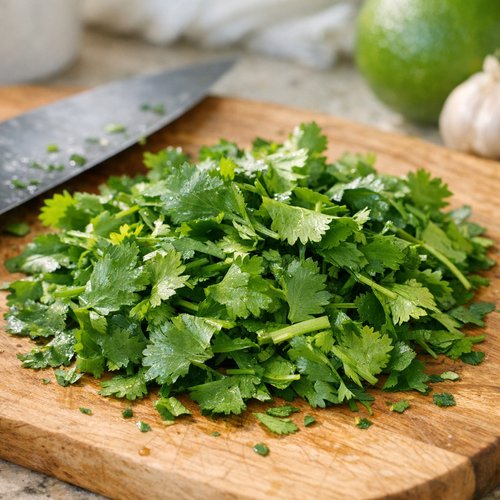
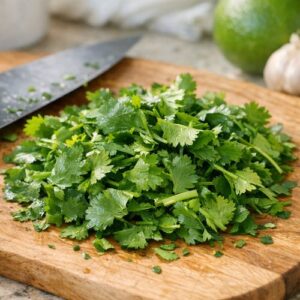
Start by roughly chopping your cilantro—and this is important. Don’t mince it into submission. You want pieces that are roughly the size of your pinky fingernail. Larger pieces will give you that beautiful flecked appearance and better texture in the final marinade. If your cilantro is wet from washing, pat it dry with a paper towel. Any excess water dilutes your final product. Measure out your three garlic cloves and mince them finely—smaller than the cilantro pieces. For the jalapeño, halve it lengthwise and use a small spoon to scrape out all the seeds and white membranes if you prefer mild heat. This is where most people make mistakes. Those white membranes contain the compound capsaicin, which is what makes peppers spicy. Removing them reduces heat by about 70 percent without eliminating the beautiful pepper flavor.
Step 2: Combine in Your Processor (Or Use the Hand-Method)
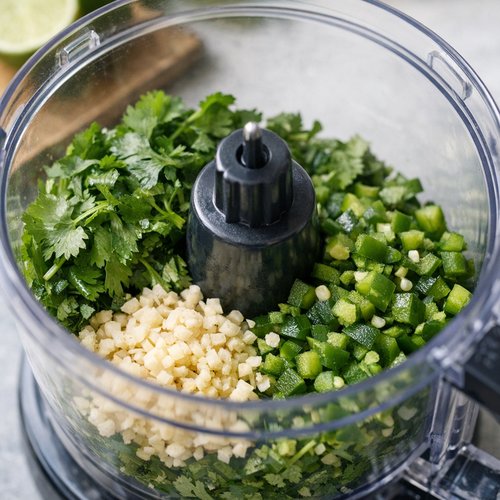
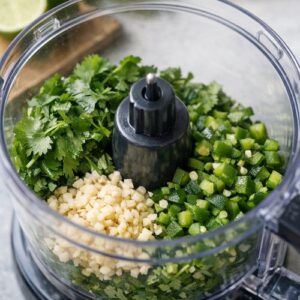
If you have a food processor, add your cilantro, minced garlic, and diced jalapeño to the bowl. Don’t add the liquids yet—this is crucial. You want to pulse the solids first to break down the herb cell walls and distribute the aromatics evenly. Pulse for about 8 to 10 short bursts, each lasting less than a second. You’re looking for a texture that’s roughly chopped but still clearly recognizable, not a smooth paste. Stop and open the lid to check your progress after about 5 pulses.
If you don’t have a processor, no problem—I make this by hand regularly. Finely mince all your cilantro, garlic, and jalapeño on a cutting board, then transfer everything to a medium bowl. Use a fork to gently mix and slightly crush the herbs as you combine them. This releases their oils without completely breaking down the cell walls.
Step 3: Add Your Fat and Acid—The Emulsification Moment
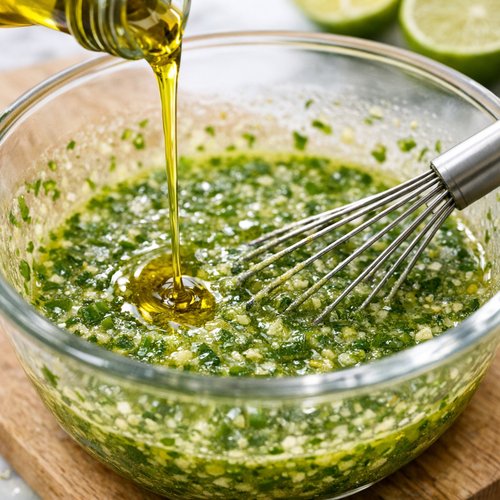
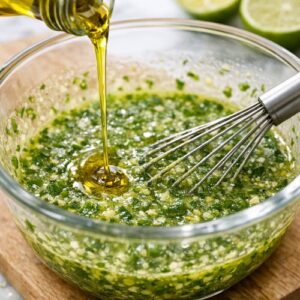
Now drizzle in your olive oil slowly while stirring. This is where the magic happens. The oil is being temporarily suspended in the herb mixture, creating that beautiful creamy-textured marinade. Don’t dump the oil in all at once—add it gradually in three additions, stirring well between each. Squeeze your lime juice fresh—bottled juice has preservatives that interfere with the flavor profile and the way the marinade clings to food. Stir gently but thoroughly, using a fork or small whisk. The mixture should look slightly emulsified, with oil and herb solids creating a cohesive whole rather than looking separated.
Step 4: Season and Taste Before Finalizing
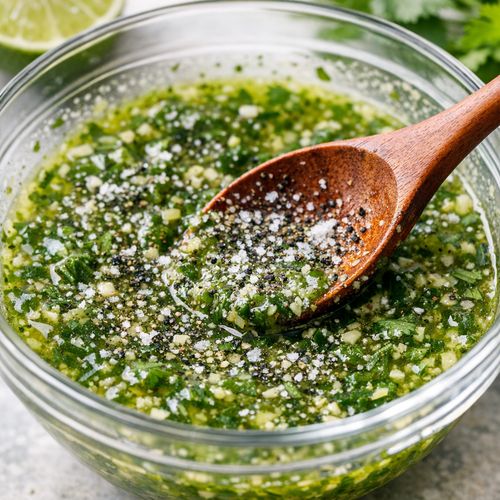
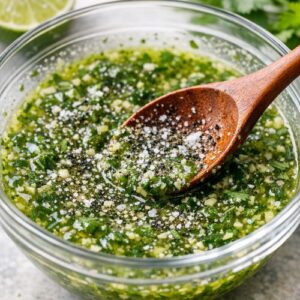
Sprinkle your kosher salt and black pepper over the surface, then stir to distribute evenly. Taste a small spoonful on your finger—this is where experience builds. Does the salt level feel right? Is the acid from the lime bright enough, or does it need more? Trust your palate. If you’re using this on delicate fish, you might want slightly less salt since the marinade is meant to enhance rather than dominate. For beef or chicken, a more assertive seasoning works beautifully. If you’re adding that optional cumin, add just a pinch and taste again. One small spoon tastes like magic; two teaspoons can overpower.
Step 5: Rest and Use Immediately or Store
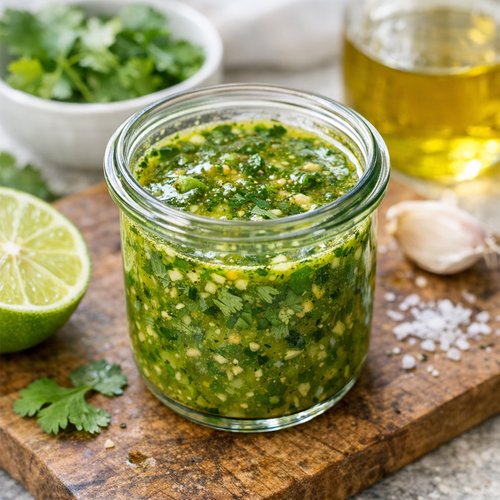
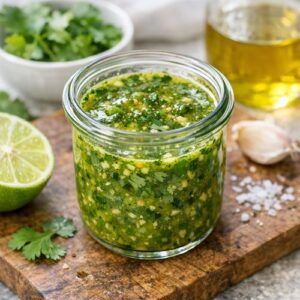
Your marinade is ready to use immediately, though it actually benefits from resting for 10 to 15 minutes while the flavors meld together. This resting period allows the salt to fully dissolve and the herbs to continue releasing their oils. The emulsion becomes slightly more stable. Use generously on whatever protein or vegetable you’re preparing—about 3 tablespoons per pound of protein. The longer something marinates, the more tender it becomes due to the acid content, but even 15 minutes creates noticeably brighter flavor.
How to Know You’ve Mastered the Technique
Mastery isn’t about perfection—it’s about recognizing the sensory signals that tell you when you’ve nailed it. Here’s what to look and listen for:
- The Appearance Test – your finished marinade should be speckled with visible herb pieces suspended throughout a slightly creamy-textured base, not separated into distinct layers of oil and liquid, and definitely not a smooth green paste
- The Aroma Test – fresh cilantro should be the dominant scent, followed by bright lime, with garlic adding depth in the background; if it smells musty or flat, your cilantro wasn’t fresh enough
- The Texture Test – when you rub a small amount between your fingers, it should feel emulsified and slightly creamy, coating your skin with oil while still feeling herbaceous and not greasy
- The Taste Test – you should taste cilantro first, then lime brightness, then salt and pepper rounding everything out; garlic should be present but not sharp or raw-tasting
Common Technique Mistakes and How to Fix Them
- Over-Processing Into a Paste – if your marinade looks like green baby food, you’ve broken down the herbs too much. The problem is that overprocessed herbs release bitter compounds and lose their fresh character. To fix it: always pulse, never blend continuously. If you’ve already over-processed, strain out some of the liquid and add fresh cilantro pieces by hand. For future batches, pulse for shorter bursts and check your progress frequently.
- Adding Oil Too Quickly and Creating Separated Layers – if your finished marinade looks like oil sitting on top of herb mixture, you didn’t emulsify properly. This happens when oil is added all at once before the herb cell walls are broken down enough to hold it. To fix it: whisk vigorously for 30 seconds. If it doesn’t come together, add a teaspoon of water and whisk again. The small amount of water helps the emulsion reform. Going forward, always add oil gradually in three additions.
- Using Dried Cilantro or Old Herbs – dried cilantro tastes like hay. Old cilantro that’s yellowed or slimy won’t emulsify properly because the cell walls are already damaged. Always use fresh herbs that smell bright and look vibrant green. Buy cilantro the day you plan to use it, or store it stem-down in water in the refrigerator.
- Forgetting to Remove Jalapeño Seeds for Heat Control – if your marinade is unexpectedly fiery, you included the seeds. There’s no fixing this once it’s made. Learn from it: next time, remove seeds and white membranes before adding the pepper. If you made a batch that’s too spicy, dollop in some sour cream or Greek yogurt to cool it down slightly.
Practice Variations to Build Your Skill
Master this basic version first, then challenge yourself with these progressively more complex variations. Each one teaches you something new about how to adapt the emulsification technique:
Variation 1: The Coconut Lime Version (Easiest Advanced Technique) Replace one-third of the olive oil with coconut oil. This teaches you how different fats create different mouthfeel and flavor. Coconut oil creates a lighter, more tropical feel while still maintaining emulsification. You’ll discover that the type of fat dramatically changes how a marinade works. This variation is perfect for fish or chicken.
Variation 2: The Double-Herb Version (Medium Difficulty) Use half cilantro and half fresh parsley or basil. This teaches you how to layer herb flavors while maintaining proper emulsification. Different herbs have different oil contents and emulsifying properties. Parsley is more delicate than cilantro; basil is more assertive. Balancing them requires understanding each herb’s characteristics. Use this on basic chicken burrito preparations for absolutely stunning results.
Variation 3: The Warm Marinade Version (Most Advanced) Gently warm your oil to about 110 degrees Fahrenheit (just warm to the touch), then add your fresh herbs and aromatics. This teaches you how heat affects emulsions and herb infusion. Warmth accelerates flavor extraction and changes the emulsification dynamics slightly. The marinade will be more flavorful but won’t last as long in the refrigerator. This advanced technique is incredible for heartier proteins like beef or pork.
Expert’s Nutritional Tip
As a registered dietitian, I want you to understand something important about this marinade: the oil isn’t just about flavor—it’s about nutrient absorption. Cilantro contains fat-soluble compounds and antioxidants that your body absorbs far more effectively when paired with fat. The olive oil in this marinade significantly increases your absorption of cilantro’s beneficial compounds, including its natural detoxification properties. Additionally, lime juice’s vitamin C helps your body absorb iron from whatever protein you’re marinating. This isn’t just a condiment; it’s nutritionally strategic cooking. The acid also helps your digestive system break down proteins more efficiently, which is why marinated meats feel lighter despite being equally protein-rich.
Make-Ahead Guide
One of my favorite aspects of this marinade is how it fits into real-life meal prep. Here’s how I structure my week around it:
Sunday Prep Strategy Make a double batch of marinade on Sunday and store it in an airtight glass container. It keeps beautifully for up to five days, though I find it tastes best within three days. On Monday, Wednesday, and Friday, I pull out my marinade and marinate whatever protein I’m serving that evening for just 15 to 20 minutes before cooking. This gives me three completely different meals with essentially zero extra effort.
Marinating Raw Proteins You can prepare your proteins with the marinade up to 24 hours ahead. Place your chicken, fish, or shrimp in a zip-top bag with the marinade and refrigerate. The acid content means you don’t need to worry about bacterial growth the way you would with unmarinated proteins. In fact, the marinade acts as a natural preservative. Just remove the protein from the refrigerator 15 minutes before cooking so it reaches closer to room temperature for even cooking.
Batch Cooking Application For feeding a crowd, I make a triple batch of marinade and marinate 4 to 6 pounds of protein at once. This creates enough for Monday dinner, Wednesday leftovers, and a freezer meal for later in the month. The marinade actually concentrates slightly as it sits, becoming more flavorful over the first 48 hours.
Can I Store Cilantro Lime Marinade Recipe?
Yes, and this is where understanding emulsions helps you store properly. Your finished marinade keeps beautifully in an airtight glass container in the refrigerator for up to seven days, though I find the flavor peaks at three to four days. The oil will likely separate slightly from the herbs and liquid—this is completely normal and doesn’t indicate spoilage. Simply stir well before using. You’ll notice the herbs gradually darken from bright green to a deeper, muted green. This is oxidation and isn’t harmful, but it does indicate the herbs are beginning to lose their vibrant character.
You can freeze this marinade for up to three months, but I recommend freezing it in ice cube trays so you can use individual portions without thawing an entire batch. Once frozen solid, transfer the cubes to a freezer bag. The emulsion will separate when thawed, but vigorous stirring brings it back together. I prefer using fresh marinade, so I save freezing only for when I’ve made extra during meal prep.
Pro Tip Never store this marinade in metal containers. The acid from the lime juice reacts with metal, creating off-flavors and potentially compromising the container. Glass or food-grade plastic only.
Nutrition Information
Based on USDA nutritional databases, each two-tablespoon serving contains approximately 115 calories, 13 grams of fat (mostly heart-healthy monounsaturated fat from olive oil), 1 gram of carbohydrates, and less than 1 gram of protein. The sodium content is approximately 290 milligrams per two-tablespoon serving depending on how heavily you salt yours. More importantly, this marinade provides significant amounts of vitamin K from cilantro (essential for bone health and blood clotting), vitamin C from lime juice (crucial for immune function and collagen synthesis), and antioxidants from the fresh herbs that protect your cells from oxidative stress. When you use this marinade, you’re not just adding calories—you’re strategically increasing the nutrient density of your meal.
What to Serve With Cilantro Lime Marinade Recipe?
This marinade is infinitely versatile, but certain pairings truly let it shine. The brightness of cilantro and lime works beautifully with proteins that have either delicate flavor (fish) or rich flavor (beef) because the marinade either enhances or cuts through accordingly. Here are my favorite pairings:
- Grilled Fish and Shrimp – the acidity tenderizes delicate proteins while the herbs complement their subtle flavor; serve with grilled fish tacos for an absolutely restaurant-quality dinner
- Chicken Breasts or Thighs – marinade prevents drying while adding remarkable flavor; use it on basic chicken burrito preparations for meal prep that tastes special
- Marinated Vegetable Sides – zucchini, mushrooms, bell peppers, and red onions absorb this marinade beautifully and become a complete side dish
- Beef Carne Asada – the herbs and acid work beautifully with beef, creating tender, flavorful meat perfect for tacos or grain bowls
- Black Beans with Rice – drizzle finished marinade over black bean and rice burrito components for unexpected flavor complexity
Seasonal Variations
Spring Version Add fresh mint and tarragon to your cilantro base. Spring herbs have a lighter, more delicate character that pairs beautifully with lamb and early-season vegetables. Use slightly less salt because spring produce is more delicate.
Summer Version This is the classic version described in the recipe. Summer cilantro is at its most flavorful, and farmers market limes are at peak ripeness. Occasionally add a pinch of cumin for grilled meats.
Fall Version Replace half the lime juice with grapefruit juice and add a tiny pinch of smoked paprika. The deeper citrus note and smoke echo autumn’s heavier flavors. This pairs beautifully with roasted chicken and root vegetables.
Winter Version Add a quarter teaspoon of ground coriander and swap half the cilantro for fresh parsley. Winter herbs need to be more assertive, and coriander adds warming spice that feels appropriate to the season.

Cilantro Lime Marinade Recipe
Ingredients
Method
- Start by roughly chopping your cilantro—and this is important. Don't mince it into submission. You want pieces that are roughly the size of your pinky fingernail. Larger pieces will give you that beautiful flecked appearance and better texture in the final marinade. If your cilantro is wet from washing, pat it dry with a paper towel. Any excess water dilutes your final product. Measure out your three garlic cloves and mince them finely—smaller than the cilantro pieces. For the jalapeño, halve it lengthwise and use a small spoon to scrape out all the seeds and white membranes if you prefer mild heat. This is where most people make mistakes. Those white membranes contain the compound capsaicin, which is what makes peppers spicy. Removing them reduces heat by about 70 percent without eliminating the beautiful pepper flavor.
- If you have a food processor, add your cilantro, minced garlic, and diced jalapeño to the bowl. Don't add the liquids yet—this is crucial. You want to pulse the solids first to break down the herb cell walls and distribute the aromatics evenly. Pulse for about 8 to 10 short bursts, each lasting less than a second. You're looking for a texture that's roughly chopped but still clearly recognizable, not a smooth paste. Stop and open the lid to check your progress after about 5 pulses. If you don't have a processor, no problem—I make this by hand regularly. Finely mince all your cilantro, garlic, and jalapeño on a cutting board, then transfer everything to a medium bowl. Use a fork to gently mix and slightly crush the herbs as you combine them. This releases their oils without completely breaking down the cell walls.
- Now drizzle in your olive oil slowly while stirring. This is where the magic happens. The oil is being temporarily suspended in the herb mixture, creating that beautiful creamy-textured marinade. Don't dump the oil in all at once—add it gradually in three additions, stirring well between each. Squeeze your lime juice fresh—bottled juice has preservatives that interfere with the flavor profile and the way the marinade clings to food. Stir gently but thoroughly, using a fork or small whisk. The mixture should look slightly emulsified, with oil and herb solids creating a cohesive whole rather than looking separated.
- Sprinkle your kosher salt and black pepper over the surface, then stir to distribute evenly. Taste a small spoonful on your finger—this is where experience builds. Does the salt level feel right? Is the acid from the lime bright enough, or does it need more? Trust your palate. If you're using this on delicate fish, you might want slightly less salt since the marinade is meant to enhance rather than dominate. For beef or chicken, a more assertive seasoning works beautifully. If you're adding that optional cumin, add just a pinch and taste again. One small spoon tastes like magic; two teaspoons can overpower.
- Your marinade is ready to use immediately, though it actually benefits from resting for 10 to 15 minutes while the flavors meld together. This resting period allows the salt to fully dissolve and the herbs to continue releasing their oils. The emulsion becomes slightly more stable. Use generously on whatever protein or vegetable you're preparing—about 3 tablespoons per pound of protein. The longer something marinates, the more tender it becomes due to the acid content, but even 15 minutes creates noticeably brighter flavor.
Notes
FAQs
Can I Make This Marinade Without a Food Processor?
Absolutely, and honestly, I do it frequently. The key to hand-method success is understanding that you’re trying to break down herb cell walls without creating a paste. Finely mince your cilantro, garlic, and jalapeño on a cutting board—I mean really fine, roughly pencil-eraser size. Transfer to a bowl and use a fork to gently stir and slightly crush as you combine with oil and lime juice. It takes three extra minutes compared to a processor, but many home cooks prefer the more rustic texture.
What’s the Difference Between Using Fresh Lime Juice Versus Bottled?
Fresh lime juice contains live enzymes and volatile aromatic compounds that bottled juice has lost during processing and preservation. When you squeeze a lime fresh, you’re capturing its peak flavor and its acid at optimal strength for denaturing proteins. Bottled juice has preservatives that subtly alter the marinade’s ability to emulsify and slightly mute the brightness. I notice the difference most clearly when marinating delicate fish—fresh juice creates a cleaner flavor. Use bottled only when fresh limes are completely unavailable, and if you do, reduce the amount slightly because bottled juice tends to be more acidic.
Why Does My Marinade Look Separated, and Is It Still Good?
Separation is completely normal and actually a sign that your emulsion is temporary—which is exactly what it should be. Remember, this isn’t a permanent emulsion like mayonnaise. The herbs will gradually separate from the oil and liquid over a few hours or days in the refrigerator. This doesn’t mean it’s bad; it just means you need to stir it before using. If you prefer a more unified appearance and texture, increase the processing time slightly to further break down herb cell walls, which creates a more stable temporary emulsion. I actually prefer the natural separation because it indicates my marinade is fresh and hasn’t been over-processed.
Can I Use This on Raw Vegetables for a Salad Dressing?
Yes, though technically it works better as a marinade than a traditional dressing because it doesn’t contain an emulsifier like mustard or egg yolk that would help it cling to lettuce. For salads, use it as-is on heartier greens like spinach or kale, or vegetables like cucumber and tomato. For delicate lettuce, whisk in one teaspoon of Dijon mustard to create a more stable dressing that clings better. The technique remains the same; you’re just adding one ingredient that better holds the emulsion together.
How Do I Know If I’ve Marinated Long Enough?
This depends entirely on what you’re marinating. Delicate fish needs only 15 to 20 minutes—any longer and the acid begins to cook the exterior, changing the texture unpleasantly. Chicken and shrimp benefit from 20 to 30 minutes. Beef can go 2 to 4 hours, and heartier cuts like brisket actually improve overnight. The visual test: look at the protein’s surface. If it’s noticeably darker or slightly opaque on the edges, the acid has done its work. Trust your eyes more than a timer. If you’re rushed, even 10 minutes provides noticeably brighter flavor than unmarinated protein.
More Recipes Using This Technique
- Grilled Fish Tacos – uses the same herb-infusion and emulsification technique to create bright, flavorful fish
- Basic Chicken Burrito Recipe – marinated chicken transforms simple burritos into restaurant-quality meals using this exact technique
- Black Bean And Rice Burrito Recipe – use leftover marinade as a dressing for grain-based bowls
You’ve just mastered something genuinely transformative. This isn’t a single recipe—it’s a cooking superpower. You now understand how to create emulsions, how herbs release their oils, how acid denatures proteins, and how to build flavor strategically. These principles apply far beyond cilantro lime marinade. You’ll find yourself reaching for them in salad dressings, pasta sauces, and every marinated dish you make for the rest of your cooking life. The confidence you’re building right now will ripple through every meal you prepare. Your family dinners—those moments that connect you all amid the daily hustle—just became infinitely more delicious. Join me on this cooking journey!
