
Ingredients
Method
Step 1: Prepare Your Work Station and Oven
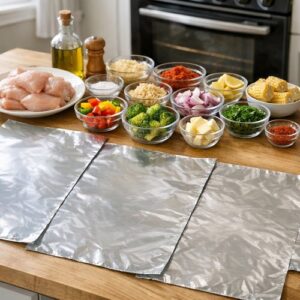
- Start by preheating your oven to 375°F. This temperature is the sweet spot—hot enough to generate steam quickly and cook potatoes through in about 35 minutes, but not so scorching that the foil packets char or the chicken overcooks before vegetables reach tenderness. While your oven heats, gather four pieces of heavy-duty aluminum foil, each cut to roughly 12 x 18 inches. Heavy-duty matters here; regular foil can tear during the crimping process. Arrange your work surface with the foil sheets laid out. This is where organization truly pays dividends. Have all your ingredients prepped and measured before you start assembling, because once you begin, you'll want to move efficiently and get packets into the oven while everything is fresh.
Step 2: Season Your Chicken with Care and Intention
- Take your four chicken breasts and pat them completely dry with paper towels. Moisture on the surface interferes with seasoning adhesion, and I want those herbs to cling to your protein. On a small plate, combine ½ teaspoon kosher salt, ¼ teaspoon freshly cracked black pepper, ¼ teaspoon paprika, and 1 teaspoon of the Italian seasoning blend. Season both sides of each chicken breast evenly, using about one-quarter of your spice mixture per breast. Place seasoned breasts on a separate clean plate. This isn't just about flavor—it's about priming the protein to absorb the aromatics and fats it will encounter. The salt begins breaking down muscle proteins, which helps them retain moisture during cooking. This is textbook food science supporting tradition.

Step 3: Build Your Vegetable Base with Strategic Layering
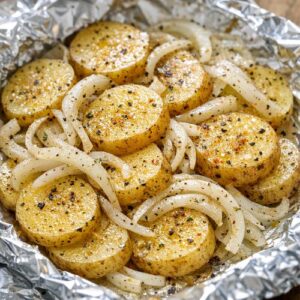
- In a large mixing bowl, combine your thinly sliced potatoes, sliced onion, and minced garlic. This is your foundational layer—the one that will cook longest and benefit most from direct heat exposure. Drizzle the vegetables with ¼ cup of your extra-virgin olive oil, then sprinkle with the remaining 1 teaspoon Italian seasoning, ¾ teaspoon salt, ¼ teaspoon pepper, and ¼ teaspoon paprika. Toss everything gently but thoroughly, ensuring every potato slice and onion strand gets coated with oil and seasoning. This distribution step is crucial. Unevenly seasoned packets result in some bites tasting bland while others taste overseasoned. Spend the extra 30 seconds making sure your vegetables are uniformly treated.
Step 4: Assemble Your First Foil Packet Layer by Layer
- Take one piece of foil and lay it flat on your work surface. Spray the center matte side lightly with nonstick cooking spray—this prevents sticking without adding unwanted ingredients. Divide your vegetable mixture into four equal portions and place one portion in the center of each foil sheet, creating a rough rectangle about the size of your chicken breast. This vegetable layer is your foundation. It's sitting directly on the foil, which will conduct heat upward. The vegetables on the bottom will caramelize slightly where they touch the hot foil surface, while those in the middle steam gently. The layering creates textural variety—some crispy edges, some tender centers.
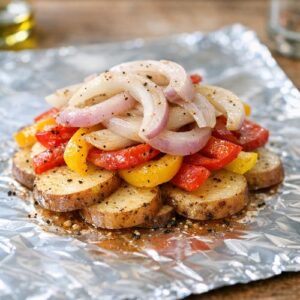
Step 5: Nestle Your Protein Among the Aromatics
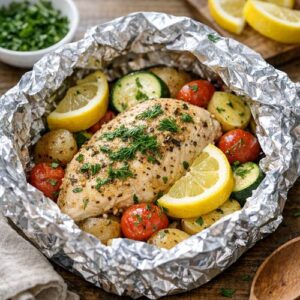
- Now place one seasoned chicken breast directly on top of the vegetable mixture. The protein acts as an insulating layer, protecting vegetables below from extreme heat while cooking through its own residual warmth. Arrange 3-4 lemon slices on top of the chicken, and top with 1 tablespoon of unsalted butter cut into small pieces. This butter-lemon combination is essential. As heat builds inside the sealed packet, the butter melts and mixes with the chicken's natural juices, creating a sauce that's entirely derived from the ingredients present. The lemon juice infuses everything with brightness and helps denature proteins gently. This is how you get restaurant-quality results from a home oven.
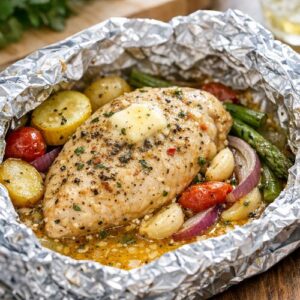
Step 6: Seal Your Packet with Precision
- This is the step that separates successful foil packet cooking from disappointing attempts. Start by folding the left and right sides of your foil toward the center, overlapping them slightly above the chicken. This creates your initial seal. Now, here's where precision matters: fold the seam down toward the chicken, creasing firmly. You're not just folding; you're crimping, creating a seal that's tight enough to trap steam but deliberate enough that it won't accidentally unfold during cooking. Next, fold the top edge of foil down toward the chicken, creasing firmly. Finally, fold the bottom edge up, creating a complete seal. Some people worry this is overcomplicated, but remember: that seal is what creates the entire cooking environment. A loose fold means steam escapes and you're essentially baking rather than steaming. Repeat this process with your remaining three packets, using one-quarter of your vegetables, one chicken breast, 3-4 lemon slices, and 1 tablespoon butter per packet. Before you place them in the oven, double-check each seal by gently trying to pry the foil apart with your finger. If it opens easily, re-seal it.
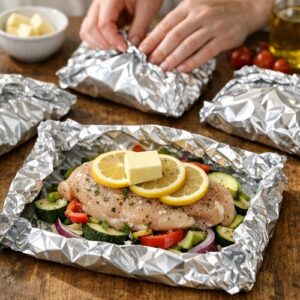
Step 7: Bake Until Vegetables Are Tender and Chicken Is Cooked Through
- Place all four sealed packets on a sheet pan (this catches any potential leaks and makes transport easier). Transfer to your preheated 375°F oven and bake for 35 minutes. This timeframe is based on the thickness of standard 6-8 ounce chicken breasts and ¼-inch potato slices. If your breasts are particularly thick or your potatoes are cut thicker, add 5 minutes. You'll know they're done when you carefully open one packet (using oven mitts and being cautious of the steam) and find that the chicken registers 165°F internally using an instant-read thermometer, and the potatoes are fork-tender with no resistance at the center.
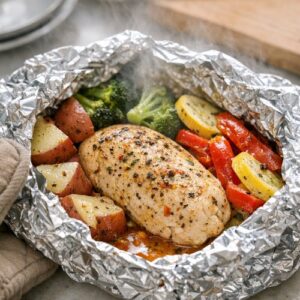
Step 8: Rest and Garnish with Fresh Finishing Touches
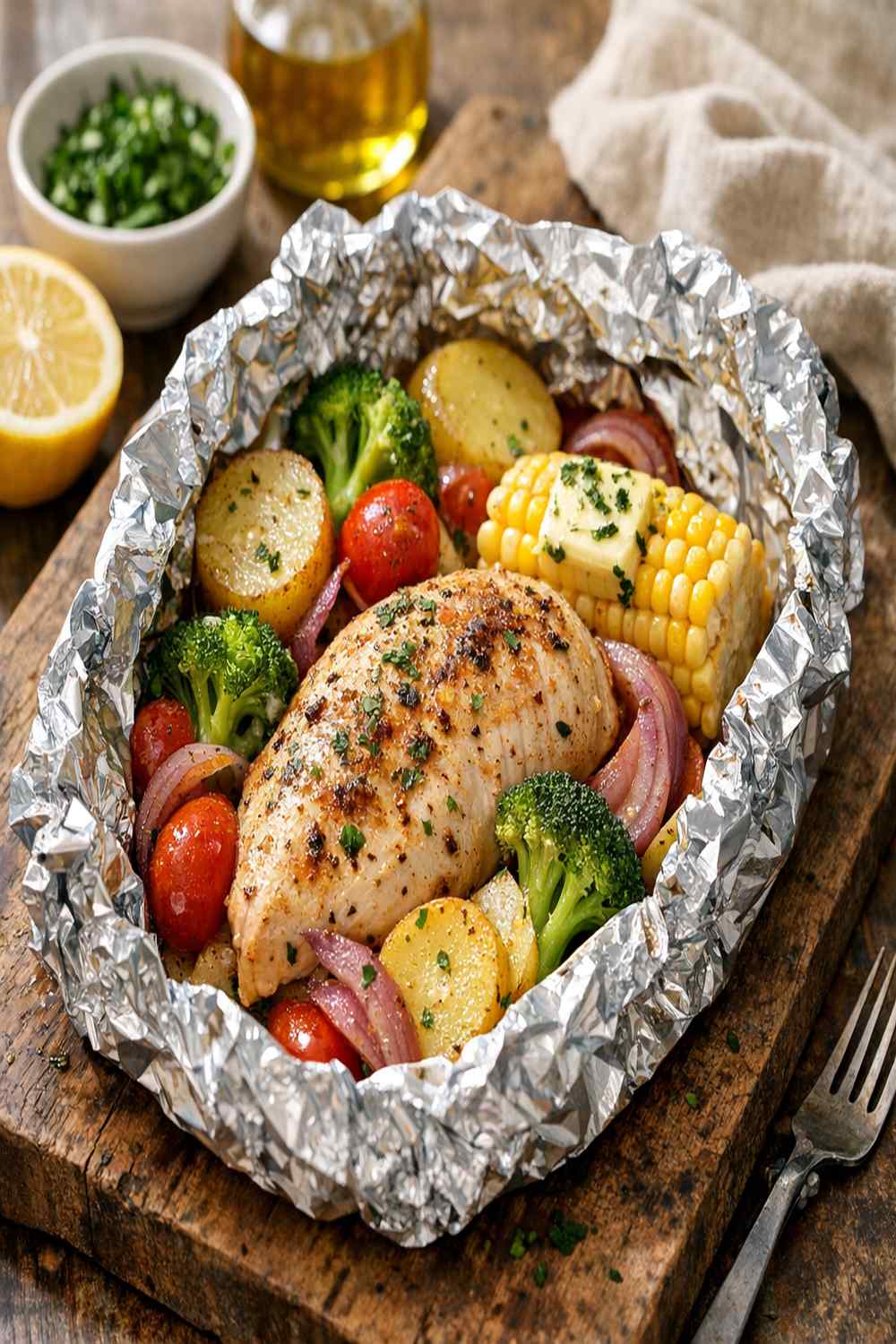
- Remove the sheet pan from the oven and let packets rest for 3-5 minutes. This isn't just for safety from steam burns—it allows proteins to continue cooking gently from residual heat while reabsorbing their own juices. If you open a packet immediately, those juices run out onto the plate instead of staying in the chicken where they belong. Carefully open each packet (again, watch for steam), and if desired, garnish with fresh herbs—parsley or dill work beautifully—and any additional lemon zest you reserved. These fresh garnishes add brightness and visual appeal that elevates the entire presentation from "dinner" to "something special."