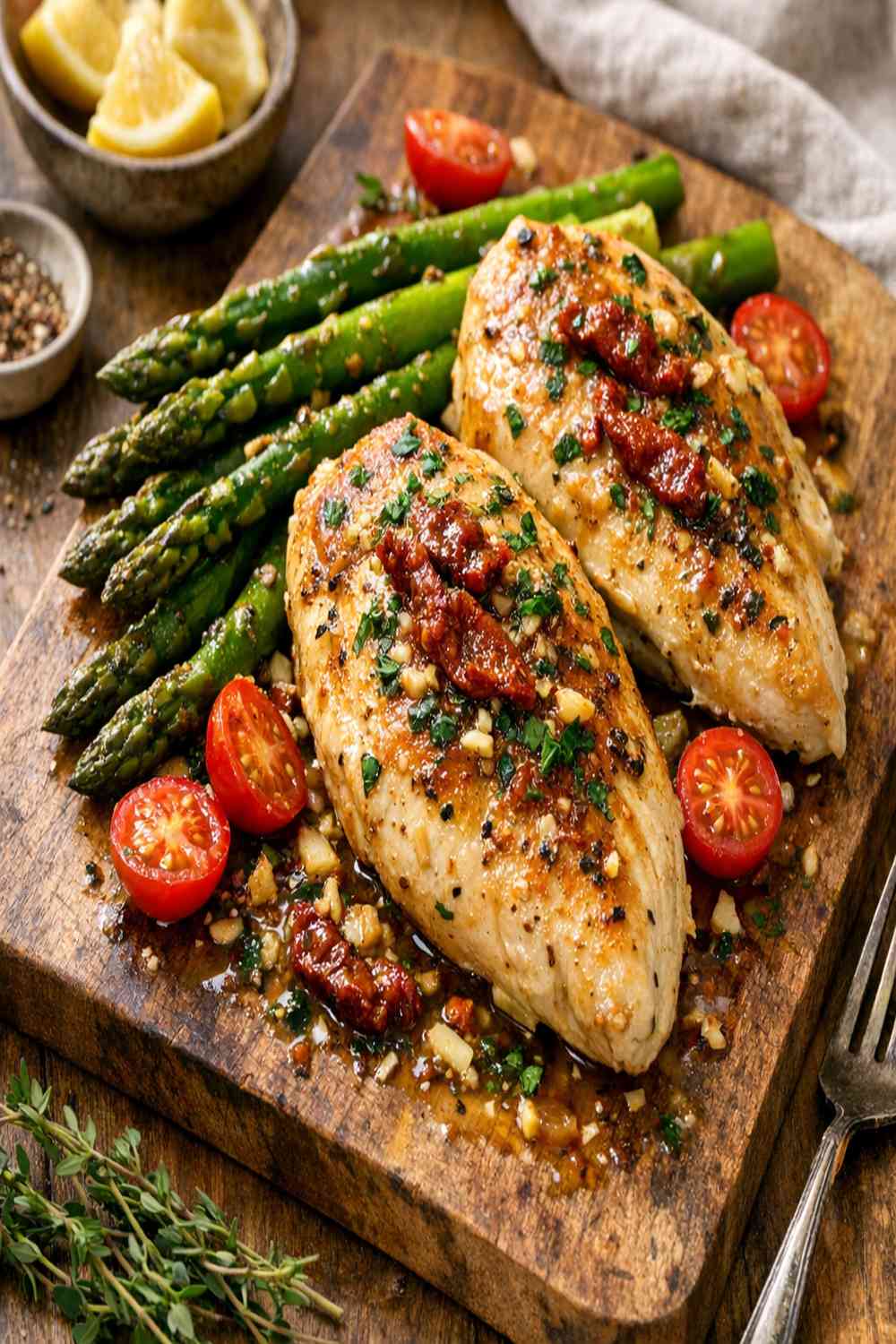

Ingredients
Method
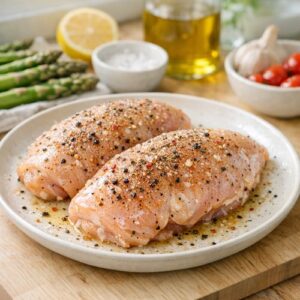
Step 1: Season Your Chicken Properly and Let It Rest
- Pat your chicken breasts completely dry with paper towels. This is the most underrated step in cooking lean chicken. Moisture is the enemy of browning, and browning is where flavor lives. Combine your Italian seasoning, crushed red pepper, ½ teaspoon salt, and black pepper in a small bowl. Season both sides of each chicken breast generously, paying special attention to the thicker edges. Here's the registered dietitian insight: let your seasoned chicken rest on a plate for 5 minutes while you prep everything else. This allows the seasoning to penetrate the muscle fibers, creating more flavor throughout instead of just sitting on the surface. It's a simple technique that professional chefs use specifically because it works.
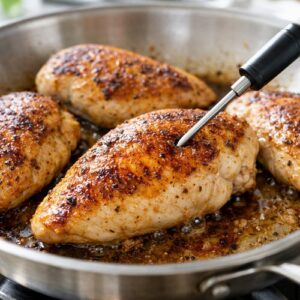
Step 2: Sear Chicken in a Large Skillet to Build Flavor Foundation
- Heat 1 tablespoon of extra-virgin olive oil in a large skillet over medium-high heat until it shimmers—this takes about 2 minutes. The oil should move easily across the pan. Once hot, carefully lay each chicken breast away from you (this prevents oil splatter). Do not move the chicken for 5-6 minutes. This immobility is crucial for developing that golden, flavorful crust through the Maillard reaction. After 5-6 minutes, flip each breast once. Cook the second side for another 5-6 minutes until the internal temperature reaches 160°F on an instant-read thermometer inserted into the thickest part. The exterior should be golden-brown, not pale. Remove the chicken to a clean plate and set aside. Don't worry if it feels slightly underdone—it will finish cooking when it returns to the sauce.
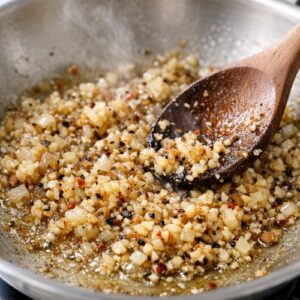
Step 3: Create Your Aromatic Base With Precision Timing
- In the same skillet (leave all those flavorful browned bits), reduce heat to medium and add ½ tablespoon of butter. Once melted, add your minced onion and cook for exactly 2-3 minutes, stirring occasionally. You want the onion just beginning to soften and turn translucent, not brown. Add your trimmed asparagus pieces and cook for another 2 minutes, stirring gently. Now add your minced fresh garlic and cook for approximately 45 seconds to 1 minute, stirring constantly. You'll smell when it's ready—a fragrant, peppery aroma that's completely different from raw garlic. If you cook the garlic longer than 1 minute, it becomes bitter. If you don't cook it long enough, it tastes raw and harsh. This 45-second window is where technique matters.
Step 4: Build Your Sauce With Balance and Brightness
- Reduce heat to medium-low and pour in your ¾ cup heavy cream and ¼ cup chicken broth. Whisk gently to combine, scraping up any browned bits from the bottom of the pan (these are liquid gold—pure flavor). Add your fresh lemon juice and immediately stir. The lemon will slightly curdle the cream for a moment; this is normal and actually indicates proper acid-fat interaction. Sprinkle in your ¼ cup freshly grated Parmigiano-Reggiano and the remaining ¼ teaspoon salt. Stir gently until the cheese melts completely into the sauce. The mixture should look silky and coat the back of a spoon. If it's too thick, add 2-3 tablespoons of chicken broth or water.
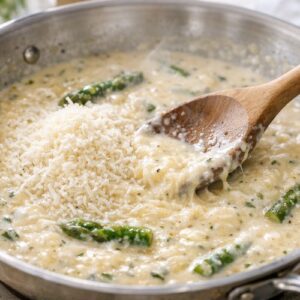
Step 5: Return Chicken and Simmer to Finish
- Nestle your seared chicken breasts back into the creamy asparagus mixture. The chicken should be partially submerged in sauce. Reduce heat to low and simmer gently for 3-4 minutes. During this time, the residual heat finishes cooking the chicken to perfect doneness (165°F internal temperature), and the sauce thickens slightly from the proteins in the cream and cheese. Taste the sauce and adjust salt and pepper to your preference. Remember: you've already added ¾ teaspoon total, so be conservative with additional salt. If your sauce is thicker than you prefer, stir in 1-2 tablespoons of additional broth. The finished sauce should coat vegetables and chicken beautifully without pooling excessively on the plate.
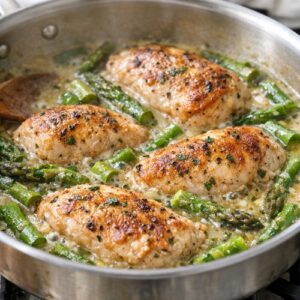
Step 6: Plate and Finish With Fresh Brightness
- Transfer one chicken breast to each plate, then spoon the asparagus and creamy sauce around and over. If you're feeling fancy (and you should—you just made restaurant-quality dinner in 30 minutes), finish with a small pinch of fresh black pepper and a few fresh basil leaves. The fresh basil adds aromatic brightness that your guests will notice immediately.
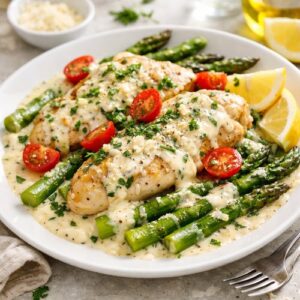
Notes
- Moving the chicken too early while searing: This is the number one mistake. If you flip your chicken before 5-6 minutes, you interrupt the browning process and end up with pale, unflavorful chicken. Trust the timing. Set a timer on your phone if you're nervous. The crust won't stick if you've patted the chicken dry—it'll release naturally.
- Using pre-minced garlic from a jar: I understand the convenience factor. But jarred garlic is 10% effective compared to fresh due to oxidation. Use a microplane zester or sharp knife. If you absolutely must use jarred, double the amount and reduce the cooking time by half, as jarred garlic is already partially cooked.
- Overcooking the asparagus before adding cream: Many recipes have you cook asparagus until tender before finishing the sauce. I cook it only 2 minutes—until it's bright green and barely tender. It finishes cooking in the residual heat while your chicken is finishing. This preserves the nutrient content (heat degrades folate and vitamin C) and keeps the texture from becoming mushy.
- Adding cold cream directly to the hot pan: This can cause the cream to break and separate. Always temper your cream by slowly whisking in 2 tablespoons of the hot pan liquid into your cream first, then add it back to the pan. Alternatively, reduce your heat to medium-low before adding cream, which prevents the temperature shock.
- Skipping the fresh lemon juice or adding it too early: Add lemon juice at the very end, just before serving. If you add it during cooking, the acid can break down the cream and create a grainy texture. The fresh squeeze right at the end maintains all the brightness and nutritional benefits.