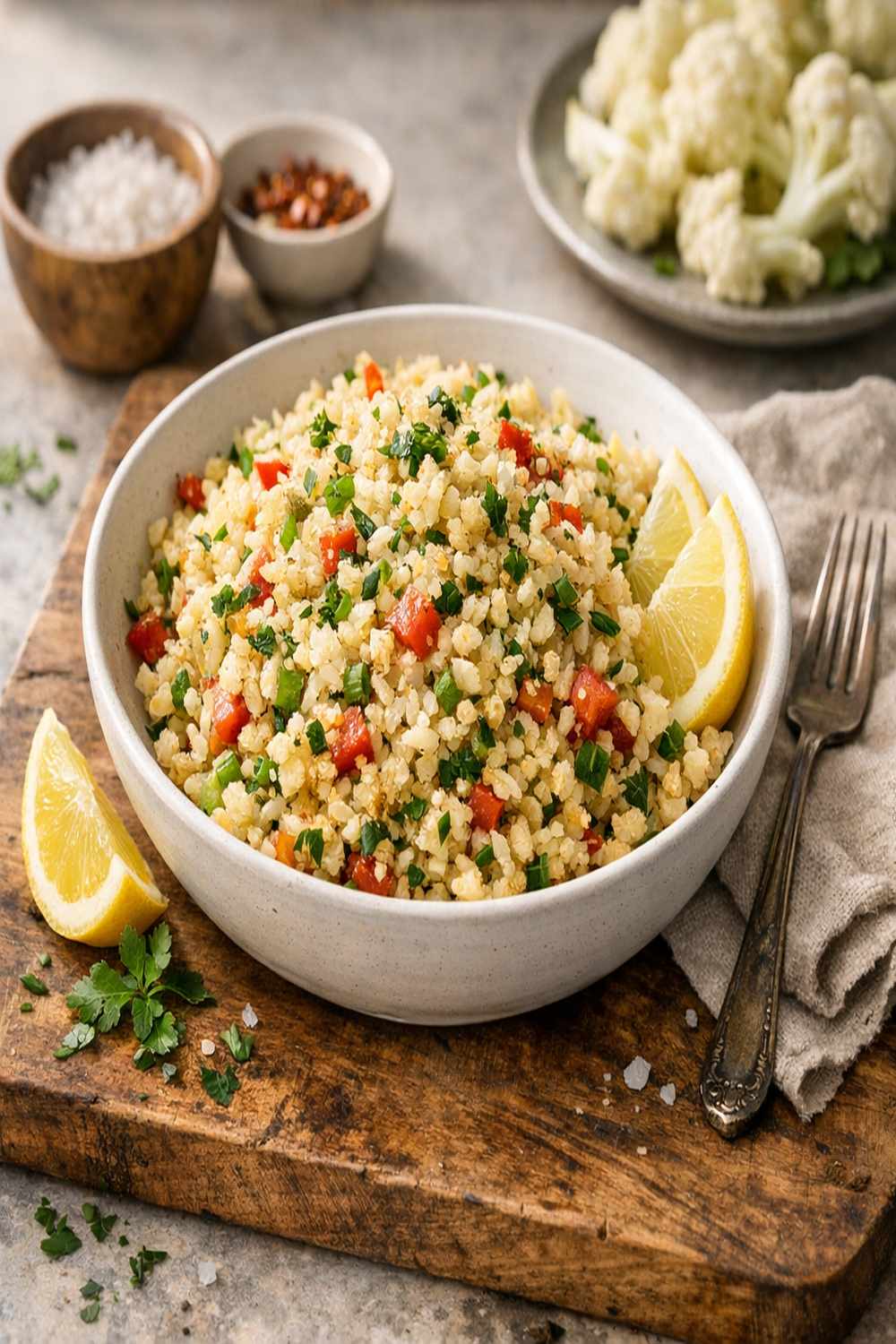

Ingredients
Method
Step 1: Prepare Your Cauliflower Florets
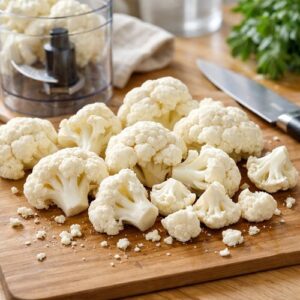
- Start by cutting your cauliflower head in half from top to bottom using a sharp chef's knife. This gives you a stable base. Now, with the flat side down, use your knife to slice away the florets from the central core by working along the natural seams where they attach. Save that core—it's edible and valuable. You can chop it finely and add it to the pan, or reserve it for my Cauliflower Potato Soup later in the week. This mindset of zero waste is how you maximize what you spend. Look at the florets you've cut away. Some will be large crown-shaped pieces, others smaller. Cut the larger ones into smaller chunks—about 2 inches across—so they fit easily through your food processor chute. This prevents jamming and means you don't lose time troubleshooting. Smaller pieces also process more evenly, giving you consistent cauliflower rice texture rather than a mix of powder and chunks.
Step 2: Process Your Cauliflower Into Rice
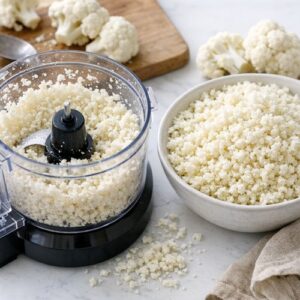
- Insert the grater/shredding disk attachment into your food processor (this is different from the blade attachment—check your manual if you're uncertain). Feed the cauliflower florets through the top chute, pushing gently with the plunger. Let the machine do the work; don't force it. You'll hear the rhythm of processing change when the hopper empties—that's your cue to pause and check the bowl. Depending on your food processor size, you may need to empty the bowl halfway through. That's completely normal and not a sign anything's wrong. Simply transfer what's processed to a separate bowl and continue with remaining florets. This takes about 4-5 minutes total and produces what looks identical to restaurant-prepared cauliflower rice. The texture should be granular, resembling couscous or short-grain rice, not powdery.
Step 3: Sauté Your Onion Base
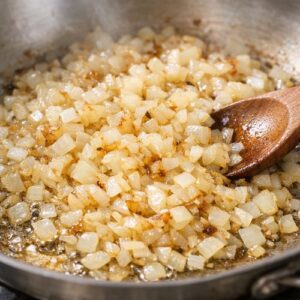
- Heat your olive oil in a large skillet (I use a 12-inch stainless steel or cast iron pan) over medium heat. Let it warm for about 60 seconds—you'll see it shimmer but not smoke. This is the temperature sweet spot where onions caramelize gently rather than brown harshly. Add your diced onion and stir occasionally for 3-4 minutes until the pieces turn translucent and the edges begin to soften and lighten in color. You're building flavor here. The onions release their natural sugars, and the oil carries that sweetness. Don't skip this step or rush it—those 3-4 minutes are where your "under $5" dish earns its "restaurant quality" reputation. Your home will smell incredible, which is also part of the value you're getting.
Step 4: Add and Sauté Your Cauliflower Rice
- Pour all your processed cauliflower rice into the pan with the softened onions. Stir everything together and spread it into an even layer. Now sauté for 5-7 minutes, stirring every minute or so. What you're looking for is warmth throughout, a slight softening of texture, and the development of very light golden-brown spots on some of the pieces. This is where the magic happens—raw processed cauliflower becomes something that feels intentional and prepared. The timing here depends on how wet your cauliflower was and your stove's heat output. If after 5 minutes it still looks very wet and pale, give it another 2 minutes. If it's already taking on color and looks dry, you're done. Taste a small piece—it should be tender enough to bite through easily but not mushy or falling apart.
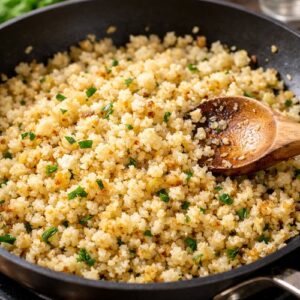
Step 5: Season and Finish
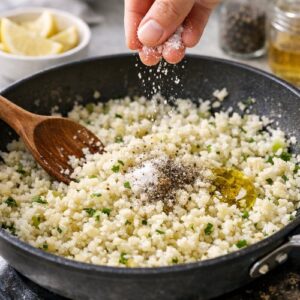
- Add your salt, pepper, and garlic powder (if using). Start with three-quarters of your salt, stir well, then taste. Season in layers—add a little, taste, adjust—rather than dumping everything in at once. This is professional technique that prevents over-salting and gives you control. The finished dish should taste savory and balanced, with the garlic adding subtle background depth. Serve immediately while warm.
Notes
- Buy cauliflower on markdown days (usually Wednesdays and Thursdays) - Most grocery stores reduce prices on produce mid-week when they're rotating stock. I check my local Safeway and Trader Joe's on these days and grab 2-3 heads to batch-prep and freeze.
- Frozen cauliflower florets save time and money if fresh feels wasteful - Frozen pre-cut cauliflower is already prepped and often costs $0.50 less. Simply skip the floret-removal step and feed frozen pieces directly through your food processor (they thaw quickly as they're grated).
- Splurge on extra virgin olive oil; skip premium sea salt - The oil's flavor is non-negotiable in this recipe since it's the primary fat. But kosher salt performs identically to fancy sea salt here, and your savings compound.
- Buy whole onions and store properly to minimize waste - A $1 bag of yellow onions gives you 4-5 onions. Store them in a cool, dark place (never the fridge—they get soft). Half an onion keeps for 3-4 days wrapped tightly in plastic wrap.