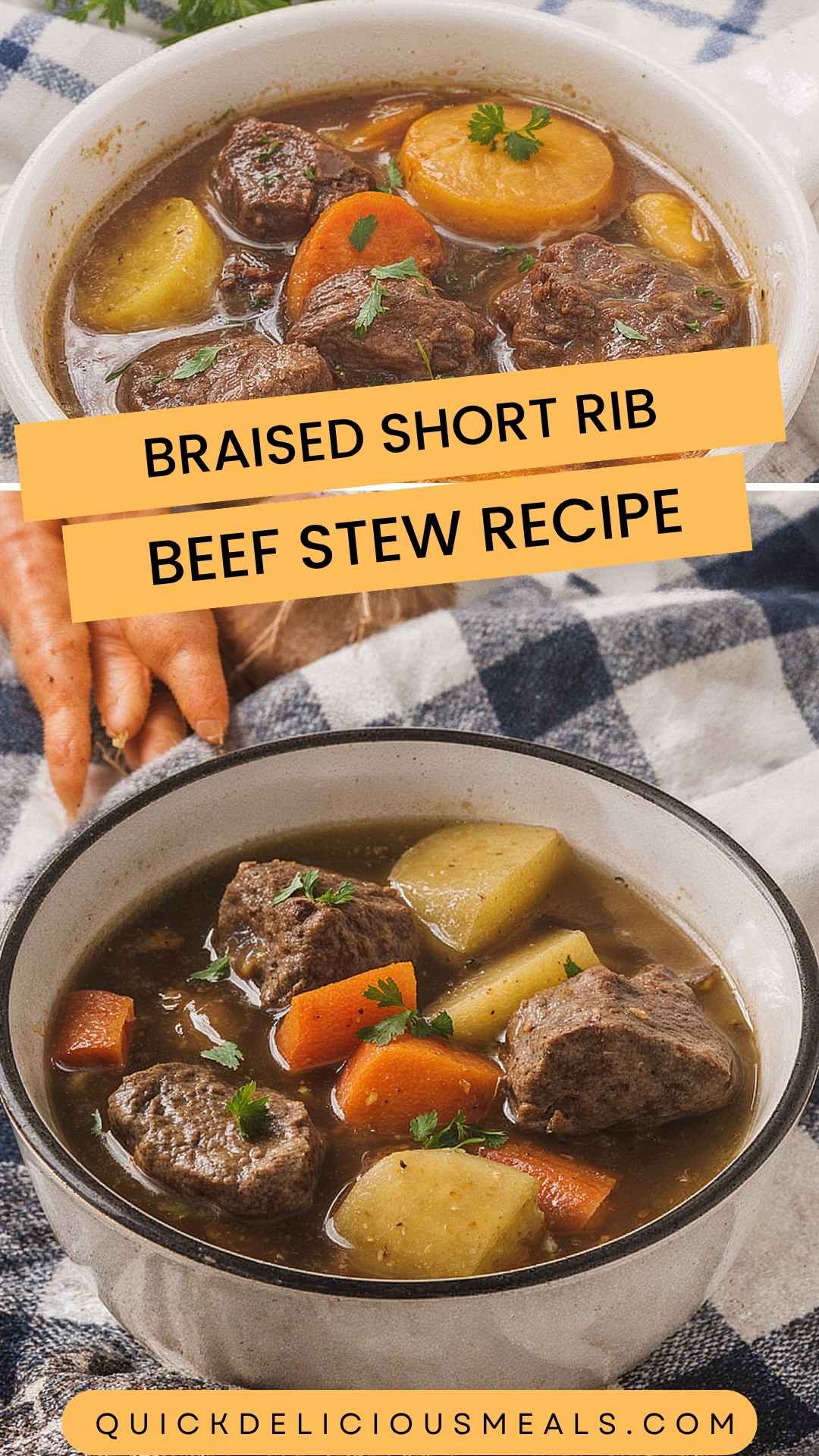
Ingredients
Method
Step 1: Sear the Beef
- In a large pot or Dutch oven, heat a drizzle of olive oil over medium-high heat. Season the short ribs generously with salt and freshly cracked black pepper. Once the oil is shimmering, add the ribs. Sear them on all sides until they develop a beautiful brown crust, about 3-4 minutes per side. Remove them from the pot and set aside.
Step 2: Sauté the Aromatics
- In the same pot, add a bit more olive oil if needed, then toss in the sliced onions. Sauté for about 5 minutes until they are translucent. Add the garlic and cook for an additional 1-2 minutes until fragrant. This step is crucial. The foundation of your stew lies here.
Step 3: Add Vegetables
- Next, stir in the chopped carrots and celery. Cook for about 5 minutes until they start to soften. This will add another layer to the stew's profile.
Step 4: Deglaze with Wine
- Pour in the red wine and use a wooden spoon to scrape up any delicious browned bits stuck to the bottom of the pot. This process is essential for depth of flavor.
Step 5: Build the Stew Base
- Now, sprinkle in the flour. Stir well to combine; this will help thicken the stew as it cooks. Gradually add the beef stock while stirring. Bring the mixture to a simmer, then return the seared short ribs to the pot.
Step 6: Add Herbs and Seasonings
- Add the fresh thyme, bay leaf, half a teaspoon of balsamic vinegar, and smoked paprika to the pot. Stir to distribute all flavors evenly.
Step 7: Slow Cook the Stew
- Cover the pot and reduce the heat to low; let the stew cook for about 2 to 2.5 hours. This is where the magic happens. The beef becomes incredibly tender, and the flavors meld beautifully. Stir occasionally to ensure nothing sticks.
Step 8: Time for the Potatoes and Peas
- After a couple of hours, add the quartered Yukon Gold potatoes. Cook for another 30-40 minutes until they are fork-tender. Then stir in the sweet green peas during the last 5 minutes of cooking.
Step 9: Final Seasoning
- Before serving, taste and adjust the seasoning with salt and pepper. Remove the bay leaf and thyme sprigs.
Notes
- Patience is Key: Take your time while searing and simmering. Rushing through these steps can lead to less flavor.
- Quality Ingredients Matter: Using high-quality beef and stock will impact the final dish significantly.
- Experiment with Veggies: Feel free to add mushrooms or parsnips based on what you have.
- Make It Ahead: Stews often taste better the next day as flavors develop.
- Thicken or Not?: If you prefer a thicker broth, allow the stew to simmer uncovered for a little longer.