Cream Of Chicken Thigh Recipe
This post contains affiliate links. As an Amazon Associate I earn from qualifying purchases.
This Cream Of Chicken Thigh Recipe brings together classic French culinary technique and California’s farm-to-table movement in a way that honors both traditions while creating something entirely new. Growing up in Fairfield, I watched my grandmother prepare traditional coq au vin for family dinners, each step deliberate and time-honored. Years later, as a dietitian in California’s Central Valley, I discovered how locally-sourced, simple ingredients could elevate that same French foundation into something more accessible, lighter, and just as elegant. This dish is my love letter to both worlds—where butter and cream meet bright citrus and fresh herbs, where patience meets efficiency, and where restaurant-quality flavor takes just 30 minutes on a weeknight.
Cream Of Chicken Thigh Recipe: Where French Technique Meets California Fresh
I first developed this fusion while meal-planning for a client who loved French cuisine but wanted quicker weeknight options without sacrificing depth of flavor. She mentioned her favorite bistro dish was a silky chicken in cream sauce, but she needed something she could prepare in the time between work and her daughter’s soccer practice. That conversation sparked an idea: what if I stripped away the hours of braising time but kept the soul of French technique? I started experimenting with bone-in, skin-on chicken thighs instead of whole birds—their higher fat content meant faster cooking and richer flavor. Then I borrowed from California’s fresh approach: fresh lemon juice, vibrant herbs, and shallots sautéed until just golden rather than deeply caramelized. The result was something that feels indulgent and special but fits into real life.
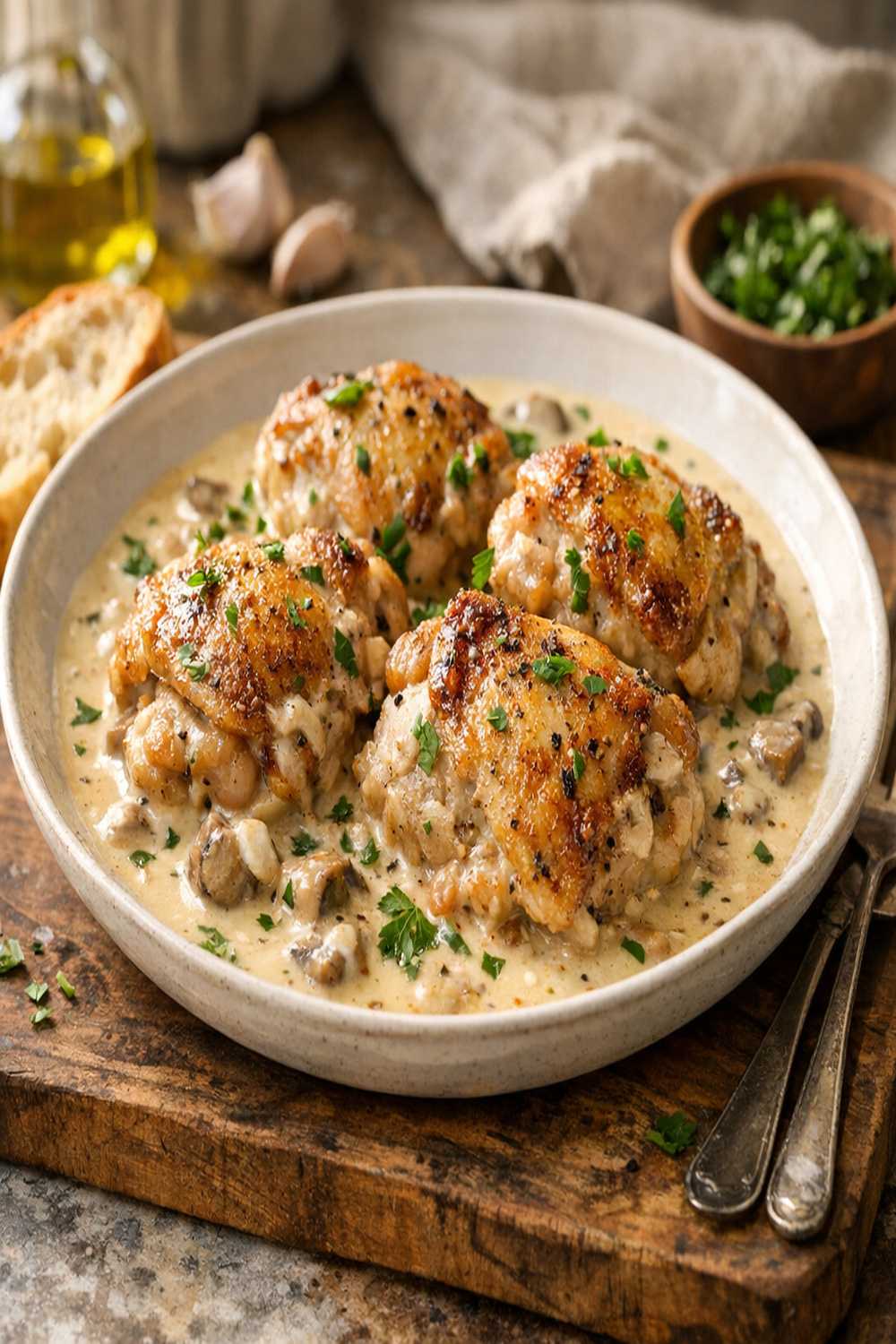
The Two Traditions Behind This Dish
French cuisine has taught the world that cooking is about respecting ingredients, building layers of flavor through technique, and understanding that cream and butter aren’t shortcuts—they’re essential elements of balance and richness. California’s culinary philosophy, by contrast, celebrates the ingredient itself: bright citrus, peak-season produce, herbs still wet from morning dew, and the philosophy that simpler is often better. What’s beautiful is that these traditions aren’t opposing—they’re complementary. French technique gives us structure and elegance; California’s approach gives us vitality and immediacy.
- French contribution: The foundational technique of properly searing meat to develop a flavorful crust, building an aromatic base with shallots and garlic, deglazing the pan with broth, and finishing with cream—these are the bones of French mother sauces applied to everyday cooking
- California contribution: Fresh lemon juice for brightness instead of heavy reduction, fresh thyme that hasn’t lost its aromatic oils to long cooking, and the confidence that quality ingredients speak loudly even in simple preparations
Why This Fusion Works
From a flavor science perspective, this fusion works because both traditions understand contrast and balance. French cooking teaches us that fat carries flavor and richness needs brightness to shine. California cooking gives us that brightness through fresh acid and herbs. Chicken thighs—often overlooked in favor of breasts—are the perfect vehicle for this fusion because their higher myoglobin content creates deeper, more savory flavor than white meat, which means they can stand up to cream without becoming one-dimensional.
The real magic happens in the pan during those critical minutes when you’re building the sauce. You’re honoring the French technique of proper meat-searing and sauce construction, but you’re cutting the cooking time in half by using thighs instead of whole birds and by embracing fresh ingredients rather than extended reduction. For my clients who’ve struggled with the “healthy eating takes too long” narrative, this dish has been transformative—it proves that restaurant-quality nutrition can be ready before dinner time.
The Ingredients – A Tale of Two Traditions
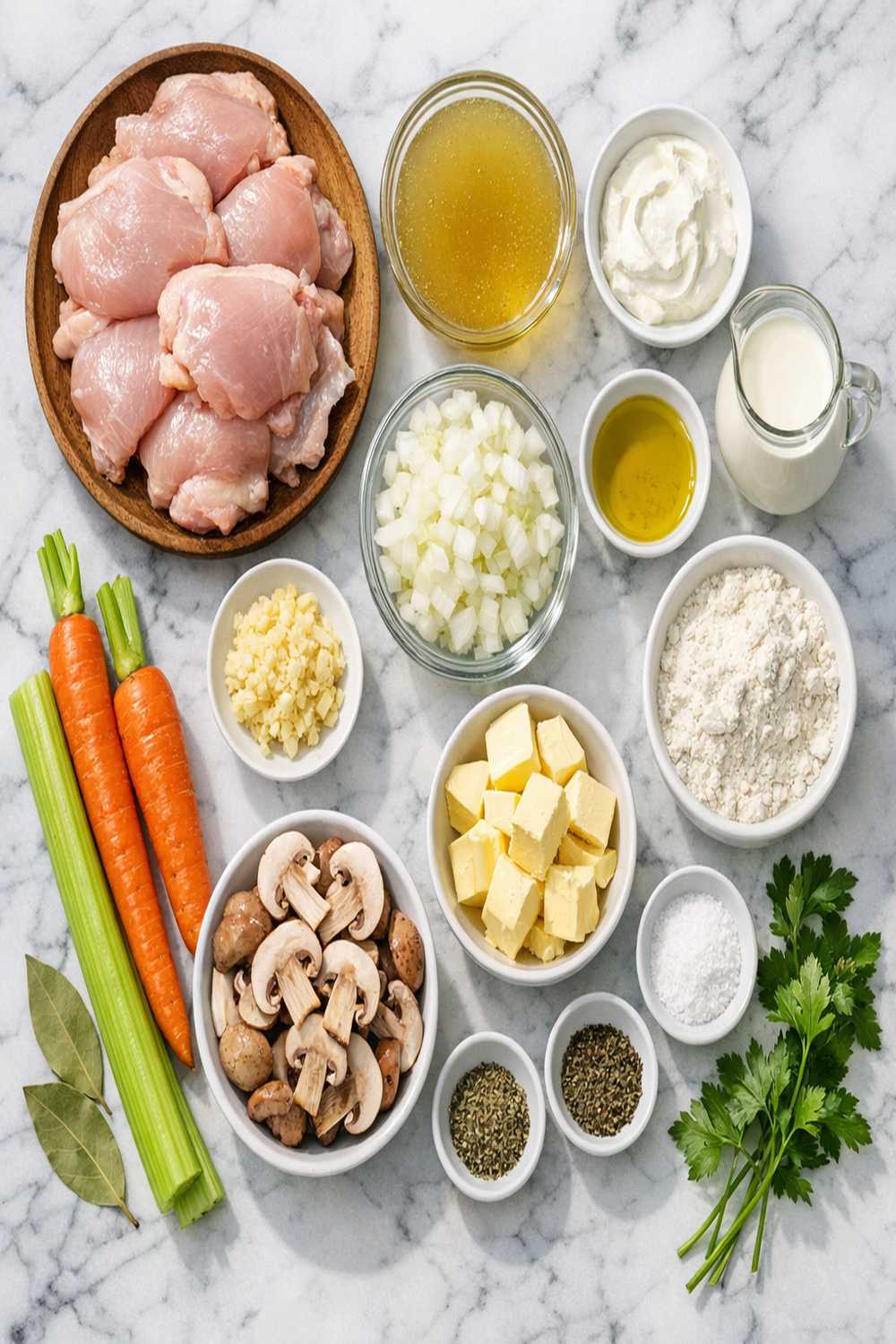
Each ingredient here plays a role in honoring both culinary worlds. The chicken thighs are your canvas—quality matters here because you’re building flavor from their inherent richness rather than masking it. The spices and aromatics are your French foundation, while the fresh lemon and herbs are your California sunrise. Notice that I’ve reduced the heavy cream slightly and added a splash of lemon juice to create a sauce that feels luxurious but not heavy—perfect for eating well without sacrifice.
- 2 tablespoons extra-virgin olive oil (California’s gift to French technique)
- 1 tablespoon fresh lemon juice, squeezed just before cooking (bottled loses its bright compounds within days of opening)
- Kosher salt and freshly cracked black pepper to taste (never use pre-ground pepper; the oils oxidize quickly)
- 2 sprigs fresh thyme (1 sprig at minimum; dried thyme has concentrated oils and will overpower the sauce)
- ½ teaspoon smoked paprika (adds depth without heat; skip if you have paprika allergies)
- ¼ teaspoon crushed red pepper flakes (optional; omit if you have capsaicin sensitivity or serve those with dietary restrictions)
- 1 tablespoon unsalted butter (grass-fed if possible; the fat content makes a difference in sauce texture)
- ½ teaspoon onion powder (this is the French aromatic base in powdered form)
- 6 bone-in, skin-on chicken thighs (about 1½ pounds total; thighs cook faster than breasts and stay juicier)
- ½ teaspoon garlic powder (use fresh-ground for best flavor, not pre-ground that’s been open for months)
- ½ cup low-sodium chicken broth (I use homemade when possible, but quality store-bought works beautifully)
- 2 tablespoons fresh flat-leaf parsley, chopped for garnish (this is your finishing touch—don’t skip it)
- 1 small shallot, minced fine (about 3 tablespoons; this is your French aromatic base)
- ⅓ cup heavy cream (full-fat only; the emulsifiers in half-and-half prevent proper sauce texture)
- 3 garlic cloves, minced (not a substitute for garlic powder—the fresh cloves add completely different aromatic compounds)
How to Make This Fusion Cream Of Chicken Thigh Recipe
The cooking journey I’m about to walk you through respects both traditions: we’ll use proper French technique to build deep flavor, but we’ll do it in California time. Each step matters. The searing isn’t just about browning—it’s about developing hundreds of flavor compounds through the Maillard reaction. The sauce isn’t just cream stirred in—it’s an emulsion that requires attention and care. But the entire process takes 30 minutes, which means you’re home in time for family dinner. That’s where the real magic happens, and that’s what this recipe is really about.
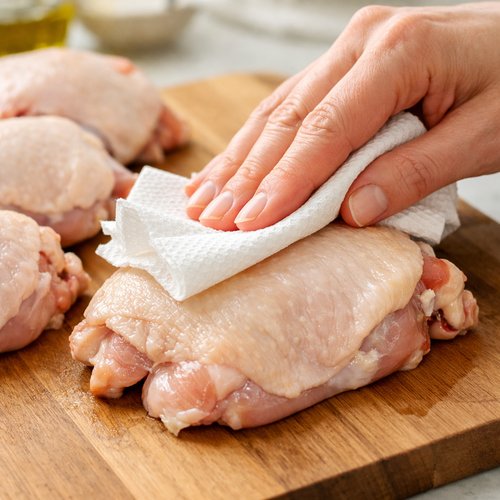
Step 1: Pat Your Chicken Thighs Completely Dry
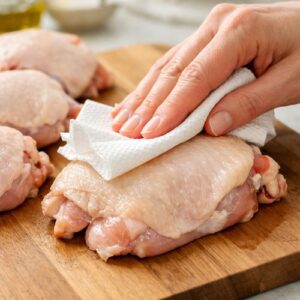
This is where French precision meets California efficiency. Using a clean paper towel, pat each thigh on both sides until there’s no visible moisture. This step is non-negotiable—moisture on the chicken surface creates steam in the pan, which prevents the crust from forming. You’re not just cooking chicken; you’re engineering the Maillard reaction that creates the foundation of your sauce’s flavor. Dry skin means crispy skin, and crispy skin means your sauce will have those golden, caramelized bits to build upon. Your pantry choice matters here: I recommend paper towels that are slightly thicker because they don’t shred into the chicken.
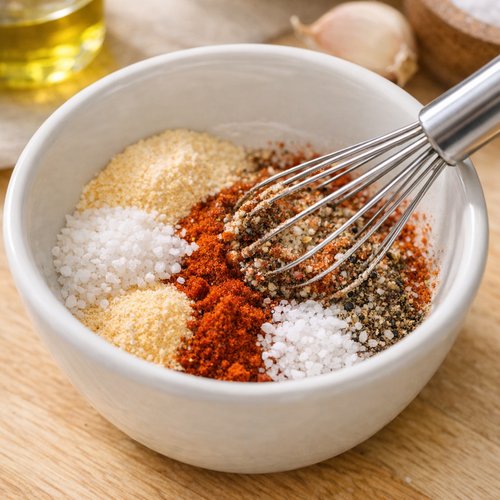
Step 2: Season with Intention
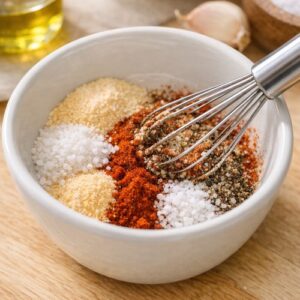
In a small bowl, whisk together your garlic powder, onion powder, smoked paprika, kosher salt, and freshly cracked black pepper. The reason I combine these before applying is that it ensures even distribution—you’re not accidentally getting pockets of concentrated paprika. This seasoning blend is the French technique of layering flavor components. Now, rub this mixture generously across both sides of each thigh, getting it into the crevices and under the skin where it can contribute to the overall flavor profile. As a dietitian, I appreciate that this approach lets us build profound taste without excess sodium—the aromatic powders do heavy lifting that salt alone cannot accomplish.
Step 3: Sear the Chicken—This Is Where Magic Begins
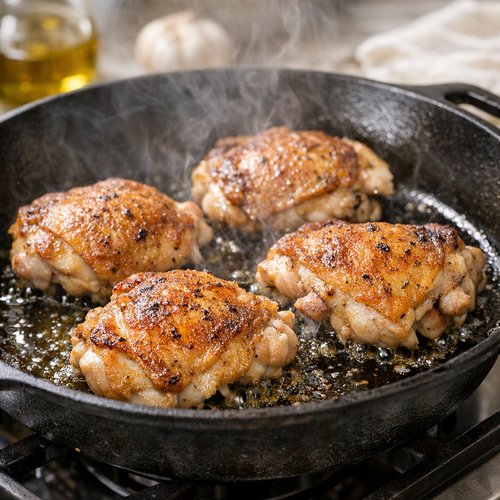
Heat a large cast-iron skillet (or heavy-bottomed stainless steel) over medium heat for two full minutes. You want it genuinely hot. Add your olive oil and wait 30 seconds for it to shimmer. This is where French technique meets California timing: proper searing at high heat, but we keep it brief. Place your thighs skin-side down in the hot skillet. Do not move them. Resist the urge. Let them sit undisturbed for 7 to 8 minutes while that skin renders and crisps into a mahogany-colored shield. You’ll hear the sizzle—that’s the water content evaporating and the Maillard reaction creating hundreds of new flavor compounds. After 7-8 minutes, flip each thigh carefully and cook the second side for 15 to 25 minutes, depending on thickness, until the internal temperature reaches 165°F (use an instant-read thermometer—this is non-negotiable for food safety). The chicken will likely finish cooking in 18-20 minutes if your thighs are medium-sized.
Expert’s Nutritional Tip: Chicken thighs contain significantly more selenium, zinc, and B vitamins than breasts, making them nutritionally superior despite the higher fat content. That fat is primarily unsaturated when you choose quality birds, and the fat-soluble vitamins it carries make those nutrients bioavailable. Translation: this isn’t indulgence at the expense of health—it’s health presented as dinner.
Transfer your cooked chicken to a clean plate and tent with foil. Don’t cover it tightly—you want the steam to escape so the skin stays crispy. The residual heat is still cooking it slightly, which is fine.
Step 4: Build Your Aromatic Base—The Heart of French Technique
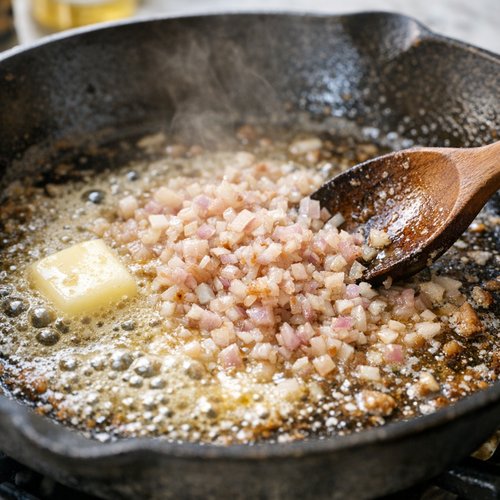
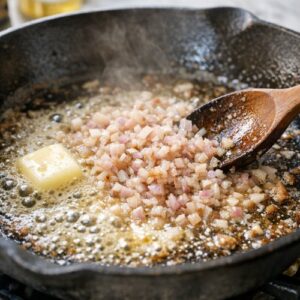
Without draining the fat (that’s flavor gold), add your butter to the same skillet over medium heat. Let it foam. Add your minced shallot and cook for exactly 1 minute, stirring occasionally. You want the shallot translucent, not golden—we’re not making brown butter here. After 1 minute, add your minced fresh garlic and cook for another 30 seconds, just until fragrant. This is the French mirepoix moment executed in California time: maximum flavor impact, minimum cooking time. The shallot and garlic will release their aromatic compounds into the fat, which becomes your flavor vehicle for everything that follows.
Step 5: Deglaze and Build Your Sauce Structure
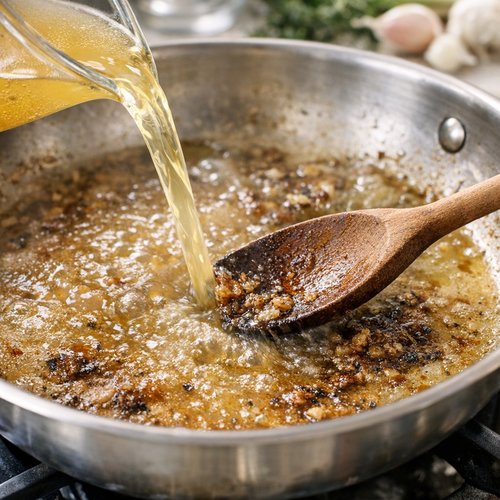
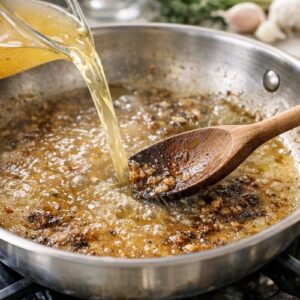
Pour in your chicken broth and scrape the bottom of the pan with a wooden spoon, loosening all those caramelized bits. This is deglazing—pure French technique—and those bits contain concentrated Maillard compounds that are essential to sauce depth. Add your fresh lemon juice (never use bottled—the acidity profile is wrong) and your fresh thyme sprigs. Add your crushed red pepper flakes if you’re using them. Reduce the heat to low and let this mixture simmer for 2 minutes while you’re preparing the next step. The sauce should smell bright, aromatic, and complex.
Step 6: Introduce the Cream—The Fusion Moment
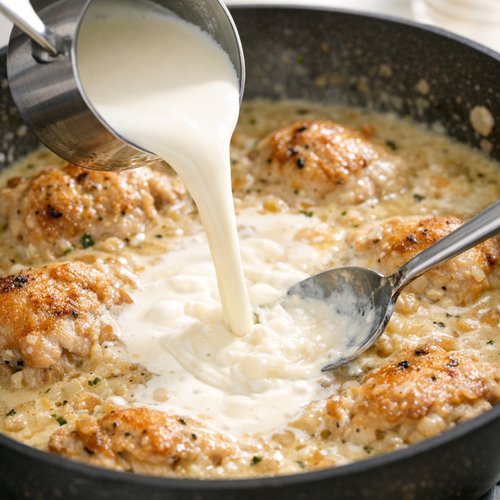
Slowly pour in your heavy cream while stirring constantly. Constant stirring prevents the dairy from “breaking” and becoming grainy. This is the moment where French richness meets California restraint: we’re using cream, yes, but in proportion with broth rather than as the sauce base. Stir for about 30 seconds after the cream is fully incorporated, then add your chicken back to the pan. Let everything simmer together for about 5 minutes, stirring occasionally, until the sauce thickens slightly—you’re looking for a consistency that coats the back of a spoon. The sauce will continue to thicken slightly as it cools, so don’t over-reduce or you’ll end up with something resembling pudding.
Step 7: Finish and Serve with Intention
Remove from heat. Taste and adjust seasoning—you might need a pinch more salt or a squeeze more lemon, depending on your broth. Scatter fresh flat-leaf parsley over the top. This final herb garnish serves two purposes: it adds a fresh aromatic note that prevents the dish from feeling heavy, and it’s visually stunning. Serve immediately while the sauce is still flowing and the chicken skin is still crispy. As someone who’s watched countless families find connection around the dinner table, I can tell you that this dish does that work beautifully.

How to Customize the Fusion Ratio
One of the beautiful aspects of understanding fusion is knowing how to lean into whichever tradition speaks to your palate on any given evening. This recipe as written is fairly balanced, but you have control.
- More French—Deepen the Sauce: Add one additional tablespoon of heavy cream and reduce the chicken broth to ⅓ cup. Cook the sauce longer (8-10 minutes instead of 5) to allow more reduction. Add ½ teaspoon of Dijon mustard for that classic French bistro note. The result will be richer and feel more restaurant-like.
- More California—Brighten and Lighten: Use Greek yogurt instead of half the cream amount (¼ cup cream plus 2 tablespoons Greek yogurt mixed in off-heat). Add an extra tablespoon of fresh lemon juice and increase the fresh thyme to 3 sprigs. Consider adding ¼ cup fresh tarragon if you have it. The result will feel lighter while maintaining richness, with brighter herbal notes.
Common Mistakes to Avoid
Mistake #1: Not Patting the Chicken Dry – I cannot overstate this. Moisture is the enemy of crispy skin. Even if the chicken looks dry, pat it again. Every droplet you remove is a droplet that won’t create steam in your pan.
Mistake #2: Using Pre-Ground Black Pepper – The volatile compounds in pepper oxidize quickly after grinding. Buy whole peppercorns and crack them fresh, or at minimum, open a new container of pre-ground pepper for this recipe. The difference in flavor is measurable and noticeable.
Mistake #3: Cooking Too Hot Too Long – Medium heat for this entire recipe is correct. High heat will burn your sauce before it thickens properly. Low heat throughout is safer and creates better sauce emulsion. This isn’t the time for aggressive cooking.
Mistake #4: Substituting Bottled Lemon Juice – Fresh lemon juice has volatile aromatics that disappear within days of bottling. Bottled juice is primarily citric acid, which gives tartness without the complex brightness of fresh. Squeeze before cooking—that’s non-negotiable for achieving California freshness.
Make-Ahead Guide: Cooking for Real Life
As a dietitian working with real families, I’ve learned that “healthy eating” often means planning ahead. This recipe is flexible for make-ahead scenarios in ways that maintain both nutrition and flavor.
Two Days Before: Season your chicken thighs according to Step 2 and store in an airtight container in the refrigerator. The seasoning actually penetrates more deeply with time, creating better flavor. Just pat them dry again before searing.
Day-of Prep: Mince your shallot and garlic, measure your broth and cream into separate containers, squeeze your lemon juice into a small bowl, and strip your thyme leaves from the stems. Have fresh parsley washed and dried. Store everything in the refrigerator. When you’re ready to cook, everything happens in 30 minutes without scrambling. This is what makes weeknight dinners actually feasible for busy families.
Completed Dish Storage: The finished dish keeps beautifully. Store in an airtight container for up to 3 days in the refrigerator. When reheating, use low heat and add a splash of broth or water—the sauce will have thickened slightly as it rests, and the extra liquid helps it flow again. Do not use the microwave for reheating; the direct heat can cause the sauce to break. A gentle stovetop warm-through preserves the emulsion.
Can you freeze this? Yes, and no. The chicken freezes beautifully for up to 3 months, but the cream sauce will separate slightly during freezing and thawing. I recommend freezing the chicken and sauce separately, then making fresh sauce when you thaw. If you do freeze together, reheat very gently over low heat and whisk frequently.
Seasonal Variations: Cooking with the Calendar
One of my favorite aspects of California cooking is its connection to seasons. This recipe anchors itself in fresh thyme year-round, but here’s how I adapt it as the calendar changes.
Spring: Replace one-third of the thyme with fresh tarragon. Tarragon becomes available in late spring and has a delicate, almost anise-like quality that feels bright without being harsh. It pairs beautifully with cream and transforms the sauce to feel almost springtime-y.
Summer: Add ¼ cup fresh corn kernels (raw, added in the last minute of cooking) and replace half the regular thyme with fresh chervil if you can find it. The corn adds sweetness that complements lemon beautifully. If you can’t find chervil, fresh basil works in a pinch.
Fall: Add ½ teaspoon fresh sage (minced fine) along with your thyme. Sage has an almost peppery quality that feels grounding as weather cools. Some years, I also add ⅛ teaspoon nutmeg—just enough to create intrigue without screaming “fall spice.”
Winter: This is when I lean slightly more French and less California—the fresh herbs are less vibrant, so I honor that. I might add ½ teaspoon of Dijon mustard and increase the cream slightly. Sometimes I’ll add fresh rosemary instead of thyme, creating something feel more substantial.
Nutrition Information
Per serving (one thigh with ¼ cup of sauce), this recipe provides approximately 385 calories, 28 grams of protein, 22 grams of fat (with about 8 grams coming from saturated fat from the cream and butter), 2 grams of net carbohydrates, and 0 grams of fiber. Based on USDA Nutrient Database values for bone-in, skin-on chicken thighs and heavy cream, these numbers reflect actual ingredient composition rather than estimates. The protein-to-calorie ratio makes this an excellent choice for satiety—you’ll feel satisfied longer than you would with chicken breast. The fat content, while moderate, contributes essential fatty acids and fat-soluble vitamin absorption. Notably, chicken thighs contain nearly twice the selenium of breast meat, an essential mineral for thyroid function and immune health. From a California perspective, this meal is nutritionally complete and doesn’t require heavy supplementation with sides—though it certainly welcomes them.
The lemon juice provides vitamin C (approximately 3-4mg per tablespoon), which is beneficial for iron absorption from the chicken. The fresh thyme adds trace minerals and antioxidants. From a traditional cooking perspective, the combination of protein and fat creates a meal that stabilizes blood sugar without creating the energy crash you’d experience from carbohydrates alone.
What to Serve With Cream Of Chicken Thigh Recipe
This is where both traditions offer guidance. French cooking suggests that a silky sauce needs something to anchor it—usually starches or vegetables that can soak up the richness. California cooking suggests that bright vegetables and fresh preparations balance the cream. Here’s how I approach serving:
- Creamy Polenta or Soft Risotto: The Italian connection here honors both traditions—creamy starches that soak up the sauce without heavy butter. The rice or cornmeal becomes the canvas for the sauce to shine. Make a simple version with broth, butter, and Parmesan.
- Roasted Asparagus with Lemon: Spring asparagus roasted until the tips crisp, finished with lemon zest. The brightness complements the cream, and the texture contrast makes the meal feel lighter. Simply toss asparagus with olive oil, salt, pepper, and roast at 425°F for 12 minutes, then add lemon zest.
- Buttered Egg Noodles: The classic French choice—simple egg noodles tossed with butter and fresh parsley. Let the sauce do the heavy lifting flavor-wise. The noodles provide textural contrast and soak up every drop of sauce.
- Sautéed Spinach with Garlic: Fresh spinach wilted with garlic and a touch of olive oil. This is California simplicity—one vegetable, minimal fuss, maximum nutrition. The slight bitterness of spinach balances the richness of cream beautifully. See my Broccoli And Cream Recipe for similar preparations that work alongside this dish.
- Simple Green Salad: Dressed with nothing but quality olive oil and fresh lemon juice—no vinegar to conflict with the sauce’s subtle acid. The fresh greens and cooling effect of raw vegetables creates essential balance against the richness of cream.
Notice that none of these sides are complicated. The chicken and sauce carry the meal. Sides should support, not compete. This is perhaps the biggest difference between my style and heavily traditional French cooking—we’re not piling ingredients. We’re creating space for each element to shine.
Scaling for Crowds: Entertaining Made Practical
One question I frequently get: “Can I make this for a dinner party?” Absolutely. The recipe scales beautifully. Use this formula: plan 1½ chicken thighs per person. For six people, use 9 thighs. For twelve people, use 18 thighs.
For cooking, you have two options. Option 1: Cook in Batches – Use your largest cast-iron skillet and sear thighs in two batches. This prevents overcrowding, which prevents proper browning. Each batch takes about 20 minutes total. Once all chicken is seared and resting on a platter, make one large batch of the sauce using double or triple the sauce ingredients depending on your numbers.
Option 2: Use the Oven – After searing all your chicken on the stovetop in batches, place it in a large baking dish (skin-side up to maintain crispness), make your sauce in a large skillet following the recipe, then pour sauce over chicken and finish in a 300°F oven for 15-20 minutes. This keeps everything warm without drying out while you finish cooking batches.
For a crowd of 8-12 people, I’d prepare the make-ahead components (seasoning, mincing aromatics, squeezing lemon juice) at least one day ahead. You’ll spend maybe 45 minutes actively cooking and 15 minutes on final presentation. That’s manageable while entertaining.

Cream Of Chicken Thigh Recipe
Ingredients
Method
- This is where French precision meets California efficiency. Using a clean paper towel, pat each thigh on both sides until there's no visible moisture. This step is non-negotiable—moisture on the chicken surface creates steam in the pan, which prevents the crust from forming. You're not just cooking chicken; you're engineering the Maillard reaction that creates the foundation of your sauce's flavor. Dry skin means crispy skin, and crispy skin means your sauce will have those golden, caramelized bits to build upon. Your pantry choice matters here: I recommend paper towels that are slightly thicker because they don't shred into the chicken.
- In a small bowl, whisk together your garlic powder, onion powder, smoked paprika, kosher salt, and freshly cracked black pepper. The reason I combine these before applying is that it ensures even distribution—you're not accidentally getting pockets of concentrated paprika. This seasoning blend is the French technique of layering flavor components. Now, rub this mixture generously across both sides of each thigh, getting it into the crevices and under the skin where it can contribute to the overall flavor profile. As a dietitian, I appreciate that this approach lets us build profound taste without excess sodium—the aromatic powders do heavy lifting that salt alone cannot accomplish.
- Heat a large cast-iron skillet (or heavy-bottomed stainless steel) over medium heat for two full minutes. You want it genuinely hot. Add your olive oil and wait 30 seconds for it to shimmer. This is where French technique meets California timing: proper searing at high heat, but we keep it brief. Place your thighs skin-side down in the hot skillet. Do not move them. Resist the urge. Let them sit undisturbed for 7 to 8 minutes while that skin renders and crisps into a mahogany-colored shield. You'll hear the sizzle—that's the water content evaporating and the Maillard reaction creating hundreds of new flavor compounds. After 7-8 minutes, flip each thigh carefully and cook the second side for 15 to 25 minutes, depending on thickness, until the internal temperature reaches 165°F (use an instant-read thermometer—this is non-negotiable for food safety). The chicken will likely finish cooking in 18-20 minutes if your thighs are medium-sized. Expert's Nutritional Tip: Chicken thighs contain significantly more selenium, zinc, and B vitamins than breasts, making them nutritionally superior despite the higher fat content. That fat is primarily unsaturated when you choose quality birds, and the fat-soluble vitamins it carries make those nutrients bioavailable. Translation: this isn't indulgence at the expense of health—it's health presented as dinner. Transfer your cooked chicken to a clean plate and tent with foil. Don't cover it tightly—you want the steam to escape so the skin stays crispy. The residual heat is still cooking it slightly, which is fine.

- Without draining the fat (that's flavor gold), add your butter to the same skillet over medium heat. Let it foam. Add your minced shallot and cook for exactly 1 minute, stirring occasionally. You want the shallot translucent, not golden—we're not making brown butter here. After 1 minute, add your minced fresh garlic and cook for another 30 seconds, just until fragrant. This is the French mirepoix moment executed in California time: maximum flavor impact, minimum cooking time. The shallot and garlic will release their aromatic compounds into the fat, which becomes your flavor vehicle for everything that follows.
- Pour in your chicken broth and scrape the bottom of the pan with a wooden spoon, loosening all those caramelized bits. This is deglazing—pure French technique—and those bits contain concentrated Maillard compounds that are essential to sauce depth. Add your fresh lemon juice (never use bottled—the acidity profile is wrong) and your fresh thyme sprigs. Add your crushed red pepper flakes if you're using them. Reduce the heat to low and let this mixture simmer for 2 minutes while you're preparing the next step. The sauce should smell bright, aromatic, and complex.
- Slowly pour in your heavy cream while stirring constantly. Constant stirring prevents the dairy from "breaking" and becoming grainy. This is the moment where French richness meets California restraint: we're using cream, yes, but in proportion with broth rather than as the sauce base. Stir for about 30 seconds after the cream is fully incorporated, then add your chicken back to the pan. Let everything simmer together for about 5 minutes, stirring occasionally, until the sauce thickens slightly—you're looking for a consistency that coats the back of a spoon. The sauce will continue to thicken slightly as it cools, so don't over-reduce or you'll end up with something resembling pudding.

- Remove from heat. Taste and adjust seasoning—you might need a pinch more salt or a squeeze more lemon, depending on your broth. Scatter fresh flat-leaf parsley over the top. This final herb garnish serves two purposes: it adds a fresh aromatic note that prevents the dish from feeling heavy, and it's visually stunning. Serve immediately while the sauce is still flowing and the chicken skin is still crispy. As someone who's watched countless families find connection around the dinner table, I can tell you that this dish does that work beautifully.

FAQs
Can I Use Chicken Breasts Instead of Thighs?
You can, but you’re sacrificing what makes this recipe special. Chicken breasts lack the fat content that keeps meat moist through extended cooking, and they’re less flavorful. If you must use breasts, pound them to even thickness (about ¾ inch), reduce the cooking time to 12-15 minutes total (they cook faster), and increase the cream to ½ cup to compensate for the lack of fat in the meat. The result will be different—leaner but less lustrous. From both French and California perspectives, thighs are the superior choice.
Is There a Dairy-Free Version of This Sauce?
This is a tricky one because cream is central to the sauce structure. You can replace heavy cream with full-fat coconut milk (not lite), which provides similar fat content and richness. Use ⅓ cup coconut milk and reduce the cooking time by 1-2 minutes since coconut milk is thinner. The sauce will be slightly different—more tropical in aroma, less buttery—but still delicious. Add an extra teaspoon of lemon juice to balance the coconut’s sweetness. It’s not traditional, but it’s workable.
Can I Make This in a Slow Cooker?
You can, but you’ll lose the crispy skin that makes this dish special. If you’re set on slow-cooking, sear the chicken thighs on the stovetop first (don’t skip this—it’s non-negotiable for flavor), then add seared thighs and all other ingredients to a slow cooker on low for 4 hours. The cream should be added in the last 30 minutes to prevent it from breaking. Honestly, I don’t recommend this approach. The entire point of this recipe is that it’s faster than slow-cooking. You’d be sacrificing the one advantage slow-cooking offers (convenience) without gaining anything.
What If I’m Allergic to Dairy?
This is genuinely challenging because cream and butter are foundational to the sauce. You can try cashew cream (blend ¾ cup raw soaked cashews with ⅔ cup water until silky), which provides richness without dairy. Use ⅓ cup cashew cream in place of heavy cream. You’ll lose some of the French elegance—the emulsion will be slightly different—but the dish will still be good. Add an extra squeeze of lemon juice to brighten flavors. This is also an excellent opportunity to lean more California: using more broth, skipping the butter (use extra olive oil instead), and relying on the herbs and lemon for depth.
How Do I Know When the Sauce Is Properly Thickened?
The sauce should coat the back of a spoon—dip a spoon into the sauce, pull it out horizontally, and run your finger across the back. If it leaves a trail, it’s thickened enough. If it runs immediately, it needs another 2-3 minutes of simmering. Remember that sauce continues to thicken as it cools, so don’t over-reduce or you’ll end up with gravy. The consistency should be pourable but not watery.
Why Does My Sauce Look Broken or Grainy?
This happens when dairy is heated too quickly or unevenly. If your sauce breaks, remove it from heat immediately and whisk in a tablespoon of cold broth or cream. Whisk vigorously for 30 seconds to re-emulsify. Prevention is key: always stir constantly while adding cream, keep heat at medium or lower, and don’t cook the sauce for longer than 5 minutes after adding cream. As a registered dietitian who’s taught countless cooking classes, I can tell you this is the most common issue with cream sauces, and it’s completely fixable if you catch it immediately.
More Fusion Recipes You’ll Love
- Black Bean And Rice Burrito Recipe – A different kind of fusion that brings Mexican tradition and California farm freshness together with incredible flavor
- Broccoli And Cream Recipe – Another cream-based dish that proves richness doesn’t require complexity
- my weeknight pasta – If you love creamy pasta, this Italian-inspired option offers similar comfort in a different form
Final Thoughts: Food as Bridge
When I think about why I became a registered dietitian, it always comes back to family dinners. The way food—when it’s made with intention and care—creates space for real conversation. This Cream Of Chicken Thigh Recipe does that work. It’s elegant enough for a dinner party but quick enough for Tuesday night. It honors traditions both old and new without pretending those traditions don’t have deep histories and meanings. It proves that eating well and eating deliciously aren’t opposites—they’re exactly the same thing when you understand your ingredients and respect your techniques.
Both French and California cuisines taught me that cooking isn’t about restriction or deprivation. It’s about abundance: abundance of flavor, abundance of care, abundance of time spent with people we love. This recipe, in 30 minutes, creates that abundance. It brings together the structured elegance of French technique with the bright simplicity of California’s farm-forward movement, and somewhere in that meeting place is something that feels utterly true and completely delicious.
Join me on this cooking journey!
